• Privacy Policy
  • Cookie Policy
  • Funds Global
    • Funds Global Asia
    • Funds Global Mena
    • Funds Tech
SUBSCRIBE
Funds Europe
No Result
View All Result
  • News
    • All news
    • People moves
    • Fund launches
  • Analysis
    • Insights
    • Content Hubs
    • Industry comment
    • Interviews
    • Opinion
    • Roundtable features
    • White paper library
  • Investments
    • Alternatives & private markets
    • Emerging markets
    • Equities
    • ETFs
    • ESG
    • Fixed income
    • Top 200 Fund Managers
  • Asset Servicing
    • Fund administration
    • Distribution
    • Technology
    • Trading
    • Trading & transfer agency
  • Regulation
    • Legal
    • Regulation
  • Reports
    • Industry Reports
    • Research Reports
    • Event Reports
  • Content Hubs
  • Events
    • Funds Europe Awards
    • Industry events
    • Webinars
  • Media
    • Magazines
    • Podcasts
    • Videos
  • About Us
    • Editorial team
    • The Magazine
    • Media Pack
    • Subscribe
    • Write For Us
    • Contact Us
  • Top 200
Funds Europe
No Result
View All Result

Is Europe about to lose the space race?

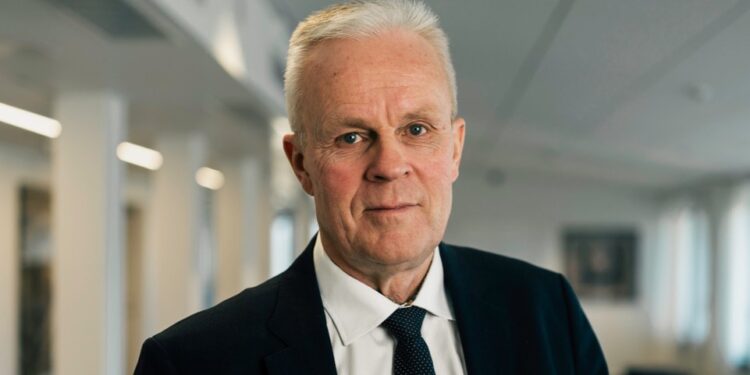
Stefan Gustafsson, a veteran of European space strategy and board adviser to Finserve Global Defence & Security Fund, argues that European rhetoric is not matched by its spending or speed

by Funds Europe
7 July 2026
Is Europe about to lose the space race?
Share on FacebookShare on Twitter

The cost of a single launch has fallen by more than 80% over the last 10 years, achieved by implementing reusable rockets, adopting new business models, borrowing production and development methods from the car industry and iterating fast.

And because European governments and companies continue to buy American launch capacity, driven by the need for cost-effectiveness to be competitive, they are subsidising the dominance they claim to want to escape.

The US is pulling in the opposite direction. For example, the new Pentagon acquisition strategy provides a regulatory framework that enables rapid action, creating new opportunities for companies to enter the market through government contracts. In addition, the new Office of Strategic Capital actively recruits foreign technology companies, offering investment and access to the American market. The pitch is aimed at US and foreign firms with new technologies that lack room to grow fast – or at all – at home. The result is familiar: capital and capability move west, while Europe’s ambitions remain on paper.

A system built for a slower world

European procurement assumes that the buyer knows what to ask for and writes a detailed specification. The supplier builds to it, often after a time-consuming acquisition process. This worked when technology moved slowly, but it is much harder when the technology has moved on before the specification is finished.

For space, European political and defence agencies have recognised this and strongly argue for rapid change. Substantial amounts of money are coming into the system from both national and common European agencies. But very little is coming out. The problem lies in the bureaucratic processes within both the agencies and the large defence contractors, built over decades of peace, low defence budgets and procurement cutbacks.

For European Space, the innovation capability lies with small, fast-moving companies that offer leading-edge, groundbreaking technologies that, when integrated through a systems-of-systems approach, can already provide Europe with most of the necessary capabilities today.

Big contrast between Europe and the US

Meanwhile, Europe’s largest defence contractors are lobbying for a return to Cold War-era contracting, in which the state first defines the requirement, then guarantees the order, all based on an extended dialogue between users and providers.

Their argument sounds reasonable until you consider that it would lock in incumbents and shut out the smaller companies, where most of the relevant innovation now sits. In a recent comparative study of European and American defence firms, the contrast was clear. European companies focused on platforms and programmes, while Americans thought in systems of systems, combining existing tech for new uses. Innovation now happens rapidly in these combinations. Without strong space infrastructure, operations will fail.

What the wars have taught us

The conflicts of the past three years have made this clear. In Ukraine, command and control was built on readily available open, commercial IT systems. It worked. It was not elegant, but it was fast and cheap. Space was brought in due to availability, and technologies such as satellite-based imagery and communications, proven useful across different layers, were taken into operations immediately. The lesson being drawn by the most exposed states, from the Gulf to the Indo-Pacific, is that speed and cost matter more than perfection. What they need and want is the ability to detect and respond in seconds, at a sustainable cost.

Europe has cards to play

There is good news. In several critical areas, European companies are technically ahead. They have simply been waiting for the world to catch up. One example: most satellites use electric propulsion and need hours or days to make even a small adjustment to their position or course. A European company that developed a faster alternative saw its revenue more than double in a year after demand appeared. Another small European company offering innovative satellite SAR radars succeeded by being prepared when demand emerged. The technology was ready; the buyers were not, until they were.

Threats move faster than institutions

The threats are also moving faster than the institutions watching them. An insurance company recently asked what would happen if someone launched a rocket loaded with gravel and released it at the right altitude. The answer is straightforward: it would be the cheapest conceivable form of disruption and it would disable everything in that orbital band. That the question came from an insurer, not a defence agency, says something about where risk awareness sits today. Similarly, the discovery that Russia has deployed electronic warfare capacity from orbit, without Western intelligence agencies detecting it in time, amounts to a serious gap in awareness. This is a real escalation, and we can expect both measures and countermeasures in space.

Sovereignty requires capacity

Even as European institutions speak of sovereignty, most of the American space industry speaks of cooperation. The West needs to work together to strengthen its position in space. No single nation can afford to do it alone, but each needs self-termination and the supply of the most decisive functions. But cooperation requires that Europe bring something to the table and build its own capacity rather than buying it from the partner it is trying to become less dependent on.

Three changes would matter more than any budget increase: a) Ease the procurement process by specifying the capability a system needs to deliver, not how it should be built; b) Increase competition by utilising small companies, awarding them parallel contracts, and measuring operational results over time; c) Open up for easier, more rapid collaboration, including transatlantic, to keep up with the rapid market evolution, but ensure development, production and delivery stay in Europe. That is how you build capacity. Shielding incumbents with single-supplier contracts is how you fall behind.


Latest from Funds Europe

Northern Trust’s Clive Bellows honoured by City of London

Northern Trust’s Clive Bellows honoured by City of London

7 July 2026
The two-tier distribution market AI is quietly creating

The two-tier distribution market AI is quietly creating

7 July 2026
Bridging the divide: the rise of hybrid funds

Bridging the divide: the rise of hybrid funds

7 July 2026
The illusion of the finish line: why the EU’s Retail Investment Strategy is far from “done”

The illusion of the finish line: why the EU’s Retail Investment Strategy is far from “done”

7 July 2026
Spotlight on liquidity management tools

Spotlight on liquidity management tools

7 July 2026

The frictionless fund: how mid-sized managers can thrive in a digital era

7 July 2026
Next Post
Northern Trust’s Clive Bellows honoured by City of London

Northern Trust's Clive Bellows honoured by City of London

Leave a Reply Cancel reply

Your email address will not be published. Required fields are marked *

TOP 200 ASSET MANAGERS REPORT


DOWNLOAD FULL REPORT

NEXT GENERATION ETFS

FUTURE FUNDS LANDSCAPE

VIDEO

LIQUIDITY MANAGEMENT

NEWSLETTER SIGNUP


Join our mailing list to receive our latest news updates, magazine features, thought leadership and market research & analysis.


SUBSCRIBE NOW
  • Contact
  • Editorial team
  • The magazine
  • Privacy Policy
  • Terms & Conditions

© 2026 Funds Europe Limited, a wholly owned subsidiary of Definite Article Media Limited. Website design by Bedazzled Publishing Services Limited.

Add New Playlist

No Result
View All Result
  • News
    • All news
    • People moves
    • Fund launches
  • Analysis
    • Insights
    • Content Hubs
    • Industry comment
    • Interviews
    • Opinion
    • Roundtable features
    • White paper library
  • Investments
    • Alternatives & private markets
    • Emerging markets
    • Equities
    • ETFs
    • ESG
    • Fixed income
    • Top 200 Fund Managers
  • Asset Servicing
    • Fund administration
    • Distribution
    • Technology
    • Trading
    • Trading & transfer agency
  • Regulation
    • Legal
    • Regulation
  • Reports
    • Industry Reports
    • Research Reports
    • Event Reports
  • Content Hubs
  • Events
    • Funds Europe Awards
    • Industry events
    • Webinars
  • Media
    • Magazines
    • Podcasts
    • Videos
  • About Us
    • Editorial team
    • The Magazine
    • Media Pack
    • Subscribe
    • Write For Us
    • Contact Us
  • Top 200

© 2026 Funds Europe Limited, a wholly owned subsidiary of Definite Article Media Limited. Website design by Bedazzled Publishing Services Limited.

No Result
View All Result
  • News
    • All news
    • People moves
    • Fund launches
  • Analysis
    • Insights
    • Content Hubs
    • Industry comment
    • Interviews
    • Opinion
    • Roundtable features
    • White paper library
  • Investments
    • Alternatives & private markets
    • Emerging markets
    • Equities
    • ETFs
    • ESG
    • Fixed income
    • Top 200 Fund Managers
  • Asset Servicing
    • Fund administration
    • Distribution
    • Technology
    • Trading
    • Trading & transfer agency
  • Regulation
    • Legal
    • Regulation
  • Reports
    • Industry Reports
    • Research Reports
    • Event Reports
  • Content Hubs
  • Events
    • Funds Europe Awards
    • Industry events
    • Webinars
  • Media
    • Magazines
    • Podcasts
    • Videos
  • About Us
    • Editorial team
    • The Magazine
    • Media Pack
    • Subscribe
    • Write For Us
    • Contact Us
  • Top 200

© 2026 Funds Europe Limited, a wholly owned subsidiary of Definite Article Media Limited. Website design by Bedazzled Publishing Services Limited.

Add New Playlist

No Result
View All Result
  • News
    • All news
    • People moves
    • Fund launches
  • Analysis
    • Insights
    • Content Hubs
    • Industry comment
    • Interviews
    • Opinion
    • Roundtable features
    • White paper library
  • Investments
    • Alternatives & private markets
    • Emerging markets
    • Equities
    • ETFs
    • ESG
    • Fixed income
    • Top 200 Fund Managers
  • Asset Servicing
    • Fund administration
    • Distribution
    • Technology
    • Trading
    • Trading & transfer agency
  • Regulation
    • Legal
    • Regulation
  • Reports
    • Industry Reports
    • Research Reports
    • Event Reports
  • Content Hubs
  • Events
    • Funds Europe Awards
    • Industry events
    • Webinars
  • Media
    • Magazines
    • Podcasts
    • Videos
  • About Us
    • Editorial team
    • The Magazine
    • Media Pack
    • Subscribe
    • Write For Us
    • Contact Us
  • Top 200

© 2026 Funds Europe Limited, a wholly owned subsidiary of Definite Article Media Limited. Website design by Bedazzled Publishing Services Limited.