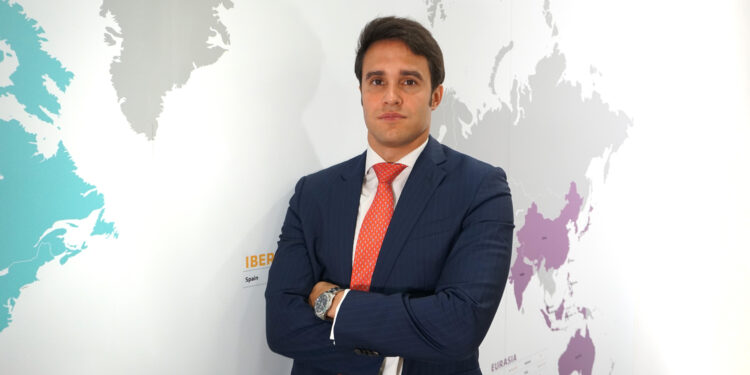
Ignacio Amo López, fund selector at Mapfre Gestión Patrimonial, the advice unit of Spanish insurer Mapfre, roots for the power of simplicity in fund management.
Q: How has your background shaped your approach to fund selection and portfolio management?
My operational due diligence background has significantly shaped my fund selection and portfolio management approach. By conducting rigorous assessments of an asset manager and fund’s operational structure, risk management practices and team expertise, I can identify potential risks that may not be observed in a traditional analysis.
Understanding a fund manager’s risk culture and control environment is essential to identify hidden risks that could impact a fund’s long-term performance. The focus involves evaluating the effectiveness of the three lines of defence that every asset manager should have: first risk line (front office and risk teams), second risk line (operations and middle office), and third risk line (internal audit).
By assessing the strength of these three lines within an asset manager, I reach a more comprehensive view of a fund’s risk profile and make more informed investment decisions anticipating potential reputational risks arising from poor risk management practices.
Q: How do you distinguish a successful portfolio manager from an average one, particularly in the Spanish market?
Various criteria can guide decision-making regarding a fund and its management team. The key element in distinguishing a proficient fund manager is the ability to convey simplicity, clarity and consistency in their philosophy and process. In my view, qualitative criteria should dominate the final decision on whether to invest in a fund, regardless of whether it is managed from London, Madrid or New York.
The current world requires constant evolution and adaptation to a dynamic environment. The asset management industry is no exception to this need for change. However, the frequent use of complex strategies within the management of a fund, often unnecessarily complicates processes that could be much more straightforward. Therefore, it is unnecessary to reinvent the wheel or complicate fund management with a labyrinth of technical jargon to achieve competitive returns.
“The key element in distinguishing a proficient fund manager is the ability to convey simplicity, clarity and consistency in their philosophy and process. Qualitative criteria should dominate the final decision on whether to invest in a fund, regardless of whether it is managed from London, Madrid, or New York.”
Q: Given current market conditions, do you believe aggressive portfolios will continue to outperform defensive ones?
The stock markets have been relying on a series of growth stocks (the “Magnificent Seven”) in a race for artificial intelligence, whose winner, and the reasons that may lead to winning that race, are not easy to determine today. On the other hand, bond markets have been fully dependent on inflation news and central banks’ decisions. Given that context, in a more stable inflation scenario where central banks start to cut interest rates in an environment of economic slowdown – with some signs of weakness such as the recent employment data in the USA – both aggressive and defensive portfolios could benefit differently. Lower rates benefit duration and improve the refinancing landscape for companies, benefiting margins that could lead to better valuation for stocks but also for corporates and high-yield bonds. Therefore, while aggressive portfolios have been outperforming, led by growth stocks, they may continue to perform well either because growth companies continue their momentum or because there is a rotation towards value or small caps (significantly affected by growth momentum). However, the improved conditions for credit and duration argue for a balanced approach, preferring asset diversification instead of concentrated stock portfolios.
Q: What strategies do you employ in portfolio management to ensure optimal performance in volatile market conditions?
Our portfolios adopt a conservative bias, even for aggressive profiles, prioritising protection amid current interest rates and political uncertainties. Given the volatile context, for this year, we emphasise diversification across asset classes, sectors, and regions to mitigate risk and seize opportunities. In equities, we have prioritised US large caps since the beginning of the year, focusing on high-quality metrics. While diversified portfolios sometimes lag concentrated growth stock gains, we adjust exposures dynamically based on market conditions.
Complementary fund selection for reaching good decorrelation is crucial for balanced portfolio construction, aiding in weathering high volatility periods. For fixed income, we began the year with defensive, short-term-focused portfolios due to the inverted yield curve, gradually adopting a barbell strategy with flexible durations. As inflationary pressures shifted positively, we transitioned to a four to five-year duration strategy by mid-year, ensuring our portfolios are well-positioned to thrive amid uncertainty.
“In a more stable inflation scenario where central banks start to cut interest rates in an environment of economic slowdown – with some signs of weakness such as the recent employment data in the USA — both aggressive and defensive portfolios could benefit in different ways.”
Q: Mapfre has recently had three of its funds classified as Article 8 sustainable funds by Luxembourg’s financial regulator the CSSF. What role does ESG play in your fund selection process, and how important is it to your Spanish investors?
Mapfre embraces ESG as a core element of the group strategy and has been a UN PRI signatory since 2017. This view has evolved integrating ESG considerations into its asset management and wealth management divisions, being a core element of the fund selection process.
In that regard, our due diligence questionnaire includes proprietary ESG questionnaires assessing asset managers’ and funds’ sustainability policies, practices, and alignment with SFDR, taxonomy and engagement initiatives, among others. These questionnaires allow us to implement an ESG-specific list of funds with a minimum 25% SFDR sustainable investment requirement (by prospectus), that feed our ESG focus portfolios.
Spanish investors have increasingly embraced ESG strategies, with Article 8 and Article 9 funds comprising 34.7% of total assets in Spanish entities as of June 2024, according to Inverco, the Spanish Association of Collective Investment Institutions and Pension Funds. This trend highlights a growing interest in sustainable investments and their potential for future growth.
Q: How are recent regulatory changes in Europe – and Spain – affecting your fund distribution strategies, and how are you adapting to align with the ‘right product, right fit’ approach?
Recent regulations have significantly reshaped fund distribution focusing on retail clients, particularly with the new Retail Investment Strategy (RIS). The implementation of this new EU directive sets a new principle that starts with the “right fit, right approach”, coupled with the growing emphasis on value for money (VFM), which will drive greater alignment between financial products and the price paid by retail investors for them.
This new approach necessitates a more rigorous assessment of investment costs and benefits, promoting pricing transparency. Traditionally hidden and difficult-to-quantify rebates are being replaced by clearer, more transparent pricing models. Execution-only and advisory services must adapt their business models to comply with these new requirements, especially in Spain where 40% of the fund distribution comes from advisory services.
Independent advisors, untied to rebates, are well-positioned and non-independent could only charge rebates “acting in the best interest of the client”, to attain the VFM-based advice.
In summary, current regulations are driving a paradigm shift in the financial industry, shifting focus from transparency in commissions to long-term value creation for investors.