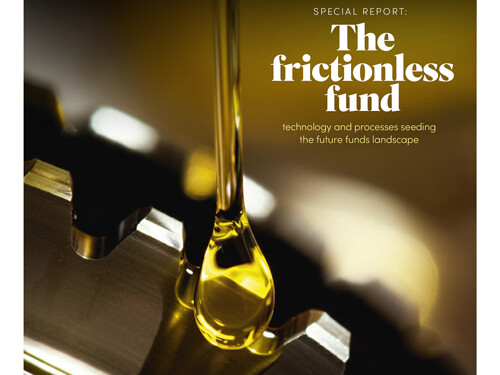
While ETFs have successfully transformed investor expectations around market access and tradability , their rapid expansion is placing unprecedented strain on legacy infrastructure. Here, tokenisation is no longer a futuristic concept ; it is the vital structural upgrade required to support the next generation of investment vehicles – according to key points included in the special report produced by Funds Europe in association with Calastone.
For over two decades, the investment landscape has been significantly reshaped by the spectacular rise of the ETF. By offering continuous intraday pricing, robust liquidity, and seamless secondary market trading , the ETF wrapper has modernised the retail and institutional experience. Yet, there remains a possible paradox: the primary market machinery responsible for creating and redeeming units remains heavily reliant on processing architectures engineered over forty years ago.
Active ETF liquidity strain
As long as the industry was dominated by simple, passive index-tracking funds, these legacy frameworks sufficed. However, the recent and rapid proliferation of active ETFs and highly complex, options-based structures has completely altered the ecosystem’s risk and liquidity dynamics. Unlike passive vehicles, active ETFs respond dynamically to volatile market conditions.
This structural evolution places an intense operational burden upon Authorised Participants (APs) and market makers. APs must create and redeem units with greater frequency, while market makers must hedge their exposures far more assertively. In an environment where settlement cycles are highly consequential, any administrative friction or reliance on fragmented systems, such as disconnected spreadsheets across major fund hubs, creates severe drag.
Thus, tokenisation is part of the evolving future, able to replace archaic plumbing with a programmable and interoperable foundation – the research suggests.
Not a product revolution
To be clear, this is not about a revolution in what ETFs are per se. This is about addressing operational bottlenecks that could impact future asset gathering. Forward-thinking asset managers are increasingly viewing tokenisation as the ultimate remedy. As industry leaders have noted, tokenisation is not about inventing entirely new investment capabilities, rather, it is a structural upgrade to how existing pools of assets are manufactured, serviced, and transferred. It represents the logical continuation of the “ETF-isation” of finance.
The immediate, practical business case for on-chain architecture is concentrated in two critical areas: distribution innovation and collateral management. By utilising smart contracts and distributed ledger technology (DLT), the creation and redemption process can be fully automated. This drastically compresses settlement cycles from days to mere minutes , eliminating counterparty risk and directly alleviating the liquidity pressures borne by APs during periods of market stress.
Real-world utility
The practical necessity of this upgrade was vividly demonstrated during the UK gilt crisis of 2022. Under severe systemic stress, liability-driven investment strategies desperately needed to mobilise collateral to meet sudden margin calls. In the traditional framework, managers were trapped in a cumbersome, operationally heavy cycle: redeeming money market fund units, waiting for cash settlement, transferring that cash, and subsequently reinvesting later.
Had these fund units been natively tokenised on-chain, ownership could have been transferred instantaneously and securely around the clock to the collateral receiver. For active ETFs, which must aggressively rebalance during market turmoil, this level of frictionless mobility is a strategic necessity.
The need for speed
In the hyper-competitive asset management landscape, first-mover advantage is everything. The first issuers to bring innovative products to market successfully capture the lion’s share of inflows. By replacing archaic, siloed operating models with scalable Software-as-a-Service (SaaS) and modular cloud tokenisation solutions, firms can achieve the operational agility required to remain competitive. Tokenisation is ultimately transforming the dream of a completely frictionless fund into a commercial and structural reality , ensuring the investment industry can gracefully navigate the next wave of global wealth transfer.
To read the full report, click here: “The frictionless fund“