Sibos 2024, the premier global financial services event, will take place in Beijing from 21-24 October, bringing together industry leaders, experts, and innovators from across the world. Here is an overview of the event followed by a ‘Talking heads’ comment on key subject matter by those attending the event or taking part in the panels.
Hosted annually by Swift, the bank messaging network, Sibos serves as a vital platform for networking, discussion, and exploration of the latest trends and challenges in the financial services sector.
This year’s theme is ‘Connecting the future of finance’ and the event will be held at the China National Convention Center, a state-of-the-art venue that will accommodate thousands of participants, including top executives, policymakers, and technology experts.
Two of the central themes at Sibos 2024 will be the evolving landscape of securities, and the implementation of ISO 20022, a globally recognised standard for electronic data interchange between financial institutions.
As the financial industry continues to advance towards greater automation and efficiency, the adoption of ISO 20022 is becoming increasingly critical. This standard is set to revolutionise the way financial data is structured and exchanged, enabling more accurate, consistent, and richer information flows across various financial transactions.
“In an increasingly interconnected world, the financial industry depends on a shared language to facilitate clear communication and the ISO 20022 standard was designed with this is mind,” says Juliette Kennel, head of standards at Swift (see box).
Interoperability never more pressing
The discussions around securities will delve into the complexities of adapting to the new regulatory environment, especially in the context of post-trade processing, settlement cycles, and the integration of digital assets. With the ongoing shift towards shorter settlement cycles, such as the move to T+1 in several markets, the need for robust and interoperable systems has never been more pressing. Sibos 2024 will explore how institutions can leverage ISO 20022 to streamline their operations, reduce risks, and improve transparency in securities transactions.
Influential figures
In addition to securities and ISO 20022, Sibos 2024 will cover a wide range of other pertinent topics, including digital transformation, cybersecurity, sustainability, and the role of artificial intelligence in finance. The event will feature keynote addresses from influential figures in the industry, panel discussions, and interactive workshops, providing attendees with valuable insights into the future of financial services.
One of the key highlights of Sibos 2024 will be the exploration of how data is increasingly becoming the backbone of the financial ecosystem. As the industry grapples with the challenges of data management, security, and privacy, the event will showcase innovative solutions and strategies for harnessing data to drive business growth and enhance customer experiences.
Sibos 2024 in Beijing promises to be an unmissable event for anyone involved in the financial services industry.

Sibos: Talking heads
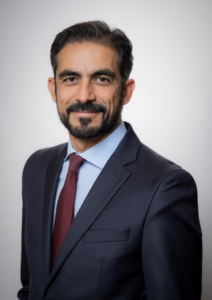
Alessandro Cavallari, head of international sales, Societe Generale Securities Services
How would you describe the global vision for accessibility, fairness and speed in securities by 2030?
By 2030, financial market accessibility will be driven by the integration of advanced digital technologies. This will reduce barriers and democratise access to securities while facilitating investments for individuals and institutions. Technologies like blockchain, AI, and cloud-based platforms will encourage real-time access to global markets. This will help people and institutions especially under-served markets and by fostering greater financial inclusion.
As digital assets become more important to investors, how associated digital frameworks are structured and regulated will be increasingly important. Artificial and machine learning algorithms will assist in more accurate risk assessment and collateral optimisation.
Automation and streamlined processes will significantly reduce transaction settlement times, clearing periods, increasing liquidity and efficiency. Enhanced data analytics will mean faster decision-making, so investors and market participants can respond to opportunities in real time.
Strengthened oversight capacity now already in force may reduce unethical market practices, while fair pricing models and transparent trading environments will ensure that participants can engage on an equal balance. This will build greater trust and fairness.
Human expertise will remain essential, especially for complex decision-making and risk management tasks. Markets will continue to use the experience of skilled professionals to ensure the integrity of trading and post-trading processes.
As we look to 2030, the expansion of post-trade solutions and the introduction of platform models, clients will increasingly benefit from the kind of complete solution and client support model to navigate a fast evolving landscape.

Gary O’Brien, global head of banks and brokers segment strategy, securities services, BNP Paribas.
How would you describe the global vision for accessibility, fairness and speed in securities by 2030?
Within the securities market, investors of all types now expect access to a wide range of instruments across a global market. By 2030, those expectations will continue and investors will look forward to a seamless solution to access any asset type in any market that they deem valuable.
They will demand for real-time visibility of the status of their activity and full, fair engagement for post-trade events like corporate actions and proxy voting. We can see that investors already expect electronic communication methods across their operations, and the role of market participants – from exchanges, through brokers, custodians and depositories – is to facilitate this in the most cost-effective way.
The challenge we face is how to stitch this together, taking into account the global reach of investor interests and the desire for a single, automated mechanism with the continuing evolution of markets at an individual level, where the focuses can be very different, creating regulatory and structural divergence. As such, the role of the intermediary will continue to be important in 2030 in facilitating fair and speedy access across markets and instruments.
*Gary O’Brien takes part in the panel ‘Securities 2030: A global vision for accessibility, fairness and speed’

Neil Wise, chief commercial officer, Clearstream Fund Services
What is the ‘real deal’ in fund tokenisation beyond digital ETFs?
At the heart of fund tokenisation is the creation of a shared, decentralised infrastructure that is reshaping fund distribution. It connects all participants, from asset managers to distributors and investors. It reduces complexity, operational costs and inefficiencies associated with traditional distribution, such as multiple reconciliations.
At Clearstream, we believe it’s about giving all players access to real-time data and offering unparalleled transparency across the chain with a clear view of the end-investor. Beyond operational improvements, it creates new distribution opportunities, such as direct access to crypto-native investors and the democratisation of private assets. By lowering barriers to entry and reducing costs, tokenisation makes investment products accessible to a wider audience.
It means being agile in using technology to solve real problems, through more cost-effective, appropriate and quick-to-implement technology. This is where tokenisation will win out.
*Neil Wise takes part in the panel ‘Fund tokenisation: How is DLT delivering transformational value to investors?’
Afzal Amijee, product director, Emea, data & analytics, Broadridge
What is the ‘real deal’ in fund tokenisation beyond digital ETFs?
The innovation in digital assets, blockchain, and tokenisation ecosystems has seen a step-change acceptance in the last few years in the fund management industry. Started with Exchange Traded Products (ETPs) for crypto assets, then moving to tokenisation of Exchange Traded Funds (ETFs), and more recently tokenisation of funds mostly for money market funds.
If successfully executed the advantages fund tokenisation can be enormous, from lower costs due to automation and reduction of administrative overheads and intermediary fees; improved market access and 24/7 global availability; increased liquidity through fractional ownerships and collateralization; and due to programmable smart contracts improved transparency and compliance for all market participants and the regulators.
Despite the potential benefits, we are still hindered from mainstream market acceptance. The key industry challenges are, trust and reputation, regulatory uncertainty, and lack of infrastructure standardisation and operability across industry platforms and participants.
As we learn from early-adopter use cases, and as the technology, regulators, and market participants comfort levels increase, we should see more compelling business cases for the adoption of tokenised fund products.
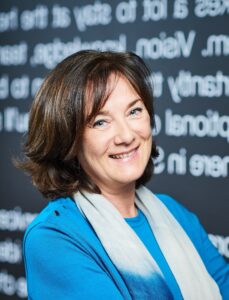
Juliette Kennel, Head of Standards, SWIFT
What is the importance of ISO 20022 and what is its future impact?
In an increasingly interconnected world, the financial industry depends on a shared language to facilitate clear communication and the ISO 20022 standard was designed with this is mind.
One of its significant advantages is the ISO 20022 data dictionary, which enables seamless mapping between standards, ensuring interoperability. The standard is open, global and covers all financial industry business domains, which also facilitates end-to-end data processing of data.
The funds industry, an early adopter, now benefits from higher end-to-end straight-through processing rates and more efficient back-office operations. In the payments sector, the growing adoption of ISO 20022 is leading to the exchange of richer, higher-quality data, reducing risk and enhancing operations.
It makes sense for the industry to invest in ISO 20022 because it is network, channel and syntax agnostic. It is a future-proof standard that can pave the way for emerging technologies and innovations to successfully scale and interoperate across borders.
*Juliette Kennel takes part in the panel ‘Future-ready securities: Innovating securities markets with ISO 20022’.
Ravindra Madduri, global head of product management, Baton Systems
The global transition to ISO 20022 as the new messaging data standard can’t come soon enough.
Currently, there is a mishmash of different payment standards across a complex web of banks, payment companies, debtors, creditors, and more. This can create friction for asset managers and other financial institutions when handling large-scale transactions.
On top of this, many firms are still clinging onto outdated, often risk-intensive, and fragile legacy payments technology, much of which functions with batch-based processes – but the business needs to operate in real-time. The richer ISO 20022 standard will incentivise a shift to more advanced data and payments infrastructures that will enable greater interoperability, bringing about improvements in cash flow, liquidity & risk management across the financial ecosystem.
Javier Hernani, head of securities services, SIX
How would you describe the global vision for accessibility, fairness and speed in securities by 2030?
Looking ahead to 2030, the securities market faces a promising yet complex future. Regulations such as MiFID have increased competition, fragmented liquidity, complicated post-trade processes and affected transparency. The recently introduced T+1 in North America is further increasing costs and complexity and leaves many question marks about how T+1 will be introduced in Europe and Asia. That is why it is so important that market infrastructures remain focused on enhancing direct access, lowering barriers, and ensuring fair pricing for smaller players in the financial markets, which will improve accessibility, fairness, and speed in securities.
In Europe, creating better connectivity across markets is key to ensuring accessibility and speed in securities, and the Capital Markets Union should go some way to enabling this across the EU. But this is not sufficient, as closely integrated and aligned European markets is necessary to remaining competitive with other global markets, and so market infrastructures have a big role to play in providing the solutions to support that integration both within the EU and with neighbouring jurisdictions, such as Switzerland and the UK.
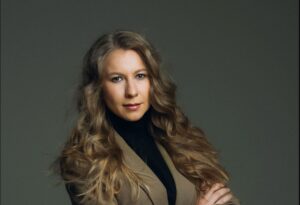
Julia Khandoshko, CEO, Mind Money
How would you describe the global vision for accessibility, fairness and speed in securities by 2030?
Regarding trends and changes in the regulation of financial processes, there will be strengthening operators in the market, creating ecosystems and increasingly regulating processes. The latter is becoming increasingly significant, and there has been a shift in consciousness from banking secrecy to improved regulation. Now, financial institutions prioritize security, such as the KYC (Know Your Customer) process and identifying the source of their funds. Control has increased, and this has become an essential part of the interaction. Every institution should not only have the technology but also the ability to work with these regulatory requirements.
Safety and reliability are ensured by the distribution of functions across different centers. Typically, some people are responsible for storing assets, while others are responsible for clearing. Blockchain is enhancing this process, because reliability is provided technologically. Tokenization will change the industry globally, but it is more an evolutionary, not a revolutionary process. It is a logical development of the stock market as an environment and institution, not its replacement.
What is the importance of ISO 20022 and what is its future impact?
Speaking about ISO 20022 and its future impact, we are solving the problem of reducing transaction costs. The new ISO format unifies, simplifies, reduces cost, and speeds up transactions. This is about greater unification and seamless processes.