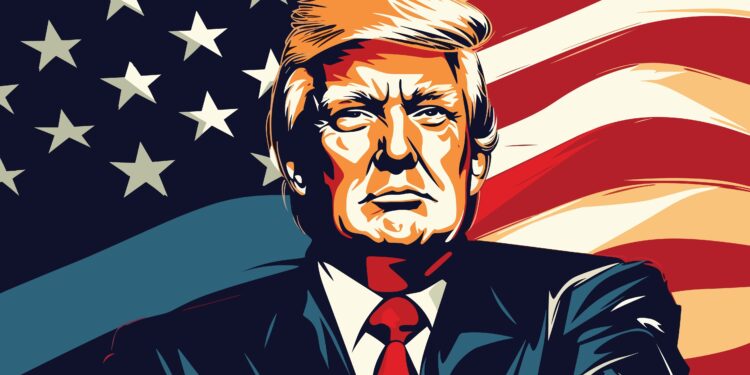
With US election results out, the asset managers are showing strong reactions to projections of a Trump victory, lifting key sectors like technology, infrastructure and defence.
In Europe, the key takeaway is that “the ECB will need to accelerate its cuts,” highlighted Gilles Moëc, group chief economist at AXA Investment Managers as current economic conditions may hinder growth, especially for export-oriented businesses. Domestic politics limit the ability of European governments, particularly in France and Germany, to offer guidance, while EU populists may seek to exploit the situation. The ECB, therefore, stands as the sole European institution capable of acting swiftly. Moëc also pointed out that there has been recent spillover from rising US long-term yields onto European yields, creating additional fiscal pressure in Europe. As a result, the ECB may need to accelerate rate cuts, with even traditionally hawkish members beginning to reconsider their stance.
Morgane Delledonne, head of investment strategy at Global X ETFs Europe, highlighted the immediate impact: “S&P 500 futures are climbing, the dollar is gaining, and bond yields are surging, reflecting bullish sentiment in US equities.” Delledonne added that the pro-industry policies expected under Trump could support a rally in companies with strong domestic operations, particularly in financial and industrial stocks, which have already shown gains. “This could be the start of a new bull market as investors look to sectors set to thrive under a Trump-led economic approach,” she said.
The positive sentiment is also echoed in the performance of midcap and small-cap stocks. Oliver Blackbourn, multi-asset portfolio manager at Janus Henderson, highlighted the standout gains in these areas, with S&P Midcap 400 and Russell 2000 futures showing rises of over 4% and 5% respectively. “This is unsurprising, given the indications that Republicans will look to keep existing tax cuts in place and aim to do more,” Blackbourn said. Interestingly, he points out that global markets, including European and Japanese equities, are also performing well, with China showing resilience despite Trump’s tough stance on trade. “The US dollar is seeing strength across the board as markets consider the potential impact of further tariffs on imports and Federal Reserve cuts have been further priced out. US Treasury yields have risen sharply, due to both the continued evolution in interest rate expectations and the potential for higher inflation,” he added.
As markets look toward policy implementation, Blackbourn shared that he foresees continued scrutiny of Trump’s economic plans. “Every pronouncement in the coming months will be pored over for hints,” he says, especially as both parties are likely to continue running budget deficits. While US economic growth remains robust, recent data show 2.8% annualised growth in Q3. However, Blackbourn cautioned that rising bond yields and limited rate cuts could pose challenges. “A soft-landing feels broadly priced in, but cracks in some areas of the economy may widen if interest rate cuts do not materialise to a large enough degree,” he added.
On the fixed income front, Justin Onuekwusi, CIO at St. James’s Place, predicted volatility in bond markets, as higher inflation could drive long-term bond yields upward, signalling either robust economic activity or potentially higher interest rates. “As the US remains the benchmark for global fixed income, the broader global bond market may feel the ripple effects of this,” Onuekwusi added.
US rates are likely to stay elevated to offset pro-cyclical stimulus, especially with a Republican-led Congress, pushing yields higher across the curve and influencing global bond yields, predicted Colin Graham, co-head of sustainable multi asset solutions at Robeco, adding that emerging market debt would maintain high real yields. “Credit markets will see a total yield rise along with sovereign bonds; US spreads will be supported by inflows and tax cuts, European spreads mixed,” Graham added.
Discussing equities, Onuekwusi predicted that sectors tied to international trade, particularly tech and consumer goods, may experience more volatility. Nonetheless, industries like energy, financials, and defence may gain from Trump’s deregulation and tax policies.
In agreement, Tom Bailey, head of research for the Future of Defence Ucits ETF (NATO) at ETF provider HANetf, highlighted that Donald Trump’s potential return to the US presidency could drive European countries to increase their defence spending further. “Trump’s return could speed up this trend, giving a strong boost to European defence stocks,” Bailey explains. Trump’s past criticism of NATO-led European nations to boost their defence budgets to ensure their security wasn’t overly dependent on U.S. support.
This shift is already underway, with more NATO countries now meeting the target of spending 2% of GDP on defence—23 out of 32 members in 2023, compared to only six in 2021. Some countries, like Poland, plan to spend as much as 5% by 2025. Bailey points out that major European defence companies, such as Rheinmetall and BAE Systems, are well-positioned to benefit from this trend, especially as they are prominent holdings in the NATO ETF.
As US military presence in Europe has significantly decreased, Bailey highlighted that European defence stocks are set for growth as Europe moves towards a more self-sufficient approach to security.