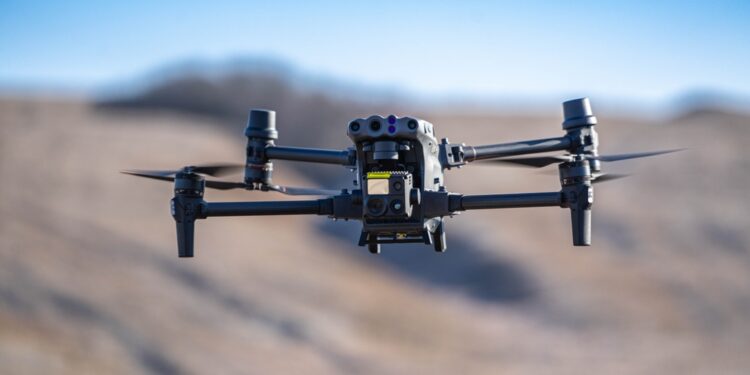
ETF provider HANetf has launched “Europe’s first” pureplay drones Ucits ETF, offering investors exposure to companies involved in the development, production and operation of unmanned aerial vehicles.
The Drone Ucits ETF tracks the VettaFi Drone Ucits Index and focuses on companies linked to three areas of growth in the drone industry: military, civil government and commercial adoption.
The ETF has a total expense ratio of 0.69% and is listed on Xetra and Borsa Italiana, with a London Stock Exchange listing expected to follow.
HANetf said the index uses a pureplay methodology designed to focus on companies materially exposed to drone and unmanned aerial systems, avoiding dilution from diversified aerospace and defence groups.
Civil and commercial drone markets are also expected to expand, with the civil unmanned aircraft systems market forecast to grow from $10.1bn in 2024 to $20.6bn by 2033, while the commercial segment alone could reach $9.5bn by 2028(GSBR Research, February 2026).
dDefence tech emerges as strategic allocation
Peter Diel, head of index product, Europe at VettaFi, commented: “Autonomous systems deliver a real asymmetric advantage across a multitude of sectors, driving increased demand in areas ranging from supply chain optimization, entertainment and consumer products to fast-growing defense and security applications. We are thrilled to partner with HANetf to bring this highly focused, innovative investment opportunity to the Ucits market.”
Tom Bailey, head of research at HANetf, commented: “Over the past few years, drones have come to dominate the battlefield in Ukraine and global defence spending is changing to reflect this.
“The US has launched a $1 billion ‘Drone Dominance’ initiative, Germany plans to field more than 8,000 unmanned systems by 2029, and the UK has committed an additional £2 billion to drone capabilities.
But defence is only one of the three growth pillars. Governments are increasingly deploying drones for disaster relief, border security and infrastructure monitoring. At the same time, as hardware costs fall and autonomy improves, commercial applications are expanding rapidly. Commercial drone use is expected to grow faster than military demand over the coming decade, with adoption accelerating across construction, industrial inspection, agriculture and logistics, where drones offer detailed surveillance and lower-cost transportation solutions.
The drone investment theme is not a derivative of the defence spending boom but reflects the broader integration of unmanned aviation systems across military, civil and commercial activities.”