Tokenisation is no longer a capital markets experiment. It is becoming the operating system institutions need when markets, investors and risk do not wait for exchange opening hours.
The Iran crisis and the Strait of Hormuz closure made that point brutally clear. Recent market coverage showed that, while traditional markets were shut, tokenised gold and oil venues became some of the only transparent, continuously trading markets reflecting real-time safe-haven demand. BlackRock’s Larry Fink has put the strategic direction plainly: “We’re at the beginning of the tokenization of all assets.” That is not a crypto anecdote. It is a warning to every asset manager, custodian and market infrastructure provider still treating tokenisation as a side project.
Institutional markets were designed around business hours, settlement cycles and intermediated processes. The world they serve no longer behaves that way. Geopolitical shocks land on weekends. Liquidity moves across time zones. Investors expect access, transparency and execution whenever risk changes, not when a legacy venue reopens.
Tokenisation matters because it changes the operating model, not just the wrapper around an asset. Equities, bonds, treasuries, commodities and real estate can be issued, held, transferred and serviced on programmable infrastructure. Ownership records can update in real time. Compliance rules can be embedded into the transfer process. Settlement can move from delayed reconciliation to delivery-versus-payment logic. Servicing events, from coupon payments to income distributions, can be automated rather than pushed through manual operational chains.
The data now backs up the direction of travel. RWA.xyz’s latest tokenised public-equities data imply annualised growth, if recent 30-day momentum were sustained, of roughly 623% in distributed value, 1,167% in represented value, 173% in monthly transfer volume and 234% in holders. Even with that caveat, the signal is clear: activity is moving on-chain, not just appearing on a dashboard.
For institutional investors, the first benefit is resilience. Tokenised markets can keep functioning when traditional rails are closed, provided the governance, custody, data and settlement layers are properly designed. The second is liquidity. Assets that are hard to trade, especially private market and real estate exposures, can become more transferable when ownership is fractionalised and eligibility rules are enforced upfront. The third is operational efficiency. Tokenisation reduces the number of handoffs between issuer, investor, custodian, administrator and registrar. Fewer handoffs mean fewer breaks, fewer reconciliations and faster capital movement.
Real estate shows why this matters beyond listed markets. Property is one of the world’s largest asset classes, but it remains trapped in slow, local and paper-heavy processes. In the Kingdom of Saudi Arabia, SettleMint is helping deliver what is the world’s first national-scale blockchain infrastructure for real estate tokenisation, supporting property registration, fractional ownership and marketplace integration. The next step is secondary market development, making tokenised property interests more transferable under supervised frameworks. That is where the foreign direct investment angle becomes powerful: clearer ownership, lower minimums, programmable compliance and deeper liquidity can make domestic real estate more accessible to international capital without losing regulatory control.
Our work with the ADI Foundation shows what regulated public-blockchain infrastructure looks like when it is built for real capital markets, not pilots. ADI provides the sovereign-grade, compliance-ready Layer-2 settlement ledger; Finstreet brings regulated CSD and MTF infrastructure under ADGM oversight; and SettleMint’s DALP manages token creation, on-chain recording, post-trade servicing, and the full digital asset lifecycle. The result is a live operating model for regulated tokenized securities across asset classes.
There are risks of course, and institutions should not pretend otherwise. Always-on markets create always-on liquidity demands. Atomic settlement removes counterparty exposure, but it also removes the time buffers banks and regulators have historically relied on. Price data, custody, settlement assets and operational controls must be institutional-grade. Speed without governance is not progress. It is just a faster way to break things.
The conclusion for European institutional investors is simple. Tokenisation should no longer sit in an innovation lab waiting for a perfect future. It belongs in the operating strategy of asset managers, custodians, fund platforms and market infrastructure providers today. The question is not whether every asset will be tokenised tomorrow. It is whether institutions are building the infrastructure they will need when the next market shock arrives outside office hours.
The Strait of Hormuz closure showed what happens when traditional markets go dark and digital venues keep trading. The next disruption may involve energy, rates, credit, currencies or real estate. Institutions that can issue, settle, service and transfer assets on programmable rails will have options. Those that cannot will be waiting for the opening bell.
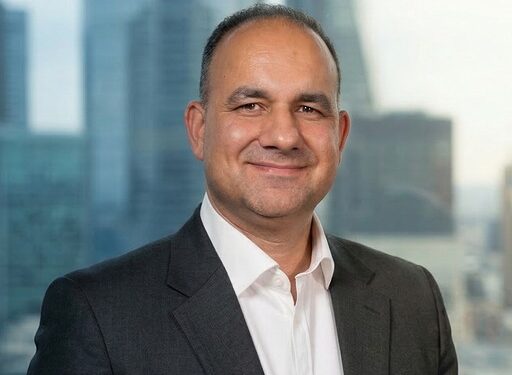
The author, Adam Popat, is CEO of Leuven (Belgium) based digital assets lifecycle platform SettleMint.