In a world marked by geopolitical realignment, inflationary pressures, tighter monetary policy and macroeconomic volatility, infrastructure investments have proven their resilience. The asset class continues to deliver stable, inflation-linked returns and has become a critical hedge against volatility.
But the next decade is not just about resilience, it is about renewal. Unlike in previous investment cycles, the next decade will see a profound shift in funding. With governments heavily indebted and global public debt expected to reach 100% of world GDP by 2029, private capital will represent the largest coordinated investment wave in the postwar era to help close the $15 trillion infrastructure investment gap. We are entering a structural, long-term build-out of assets powered by three unstoppable forces: reindustrialization, digitalization and decarbonization. Together they form the pillars of an infrastructure supercycle.
Reindustrialisation and the Return of the Real Economy
The fragility of extended global supply chains has sparked a wave of reindustrialization, particularly across Europe and North America. This movement is about more than reshoring production; it represents a systemic reinvestment in domestic industrial production capacity.
Industrial growth requires massive, long-term infrastructure commitments: reliable energy, efficient logistics, and high-speed connectivity. Every factory expansion, logistics hub or data-intensive process depends on physical and digital infrastructure.
For investors, this opens an expansive opportunity set – in logistics and transportation assets that move goods; in distributed energy systems that power industrial parks; and in data infrastructure that underpins automation and AI-driven manufacturing.
Crucially, many of these opportunities sit in the mid-market with nearly 90% of global infrastructure deal flow occurring in this segment: projects too large for small developers yet too complex, specialized or region-specific for mega-cap funds. This is where nimble private capital excels, combining operational expertise, flexible structuring, speed of execution and a deep understanding of how to unlock value from essential assets.
The Digital Backbone of the New Economy
Data centres, fibre networks, and cloud infrastructure are now as essential as roads and bridges. As the adoption of AI and cloud computing accelerates, the world’s demand for power to enable these technologies is exploding. According to McKinsey, the world will need to invest $7 trillion in data centers by 2030 to meet the surging demand for compute power, largely driven by AI. Each of these facilities requires stable, reliable power; advanced cooling systems; and network proximity to both consumers and energy sources, all capital-intensive infrastructure needs. Crucially, many of these assets sit in the mid-cap digital segment where fragmentation creates room for value creation through consolidation, operational efficiency, and integration. Private investors will help meet this demand and will play a vital role in funding the needs of the digital backbone of the new economy.
Decarbonization: The Defining Investment Theme of Our Era
The path to net zero is an infrastructure story. Renewables are essential, but the supporting systems – grids, storage, transmission, and carbon management – require even more investment.
Every megawatt of solar or wind capacity must be matched with interconnection, backup storage, and digitally managed grids. That build-out requires deep pools of long-term capital and industrial expertise.
There is significant momentum in renewables platforms, distributed energy networks, and mid-market power generation businesses that combine sustainability with stable, inflation-linked returns. These projects align seamlessly with private investors’ objectives for long-duration, cash-yielding assets that also advance the energy transition.
Mobilizing Private Capital for the Supercycle
Every global megatrend now depends on infrastructure to succeed. Reindustrialization requires logistics and energy; digitalization demands connectivity and power; decarbonization hinges on grids and storage.
The scale of the opportunity makes private capital indispensable. Meanwhile, governments lack both fiscal space and execution agility to fund the next wave of global infrastructure. Public policy can play a catalytic role through targeted incentives, clear regulatory frameworks, and innovative financing tools such as infrastructure banks and public-private partnerships, but the heavy lifting in design, development, and operation will fall to private capital.
For private investors, this is more than diversification. They can now participate alongside institutional partners via co-investments, feeder funds, and tokenized real-asset platforms. Importantly, the mid-market provides the optimal entry point with deal sizes large enough to offer meaningful returns, yet small enough to avoid overcapitalized competition.
This is not merely an investment cycle, it is the foundation of a new industrial era. It is a once-in-a-generation opportunity for private investors to build assets that make economies more resilient, societies more sustainable, and technology more productive. The investors who recognise that and act on it, will help shape the next century of global growth.
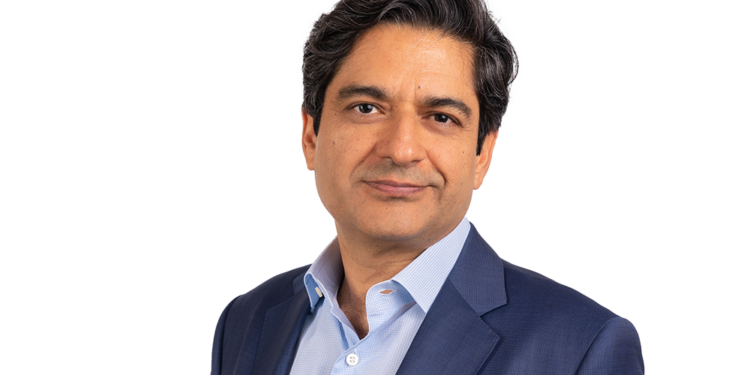
By Gautam Bhandari, Co-Founder, Managing Partner and Global Chief Investment Officer at I Squared Capital