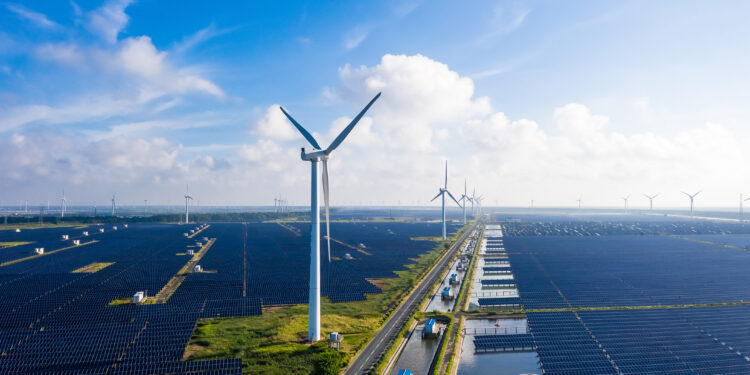
A surge in power demand fuelled by AI, growing energy demands in emerging markets, geopolitical tensions, and the push for decarbonisation is reshaping the energy landscape, offering investors opportunities and risks with portfolio implications, research has shown.
In its latest report, asset manager PGIM’s research highlighted that the energy transition, despite the urgency underscored by the Paris Climate Agreement, cannot occur uniformly worldwide, and simplistic investment strategies categorizing companies as “brown” or “green” are inadequate.
“No energy source is perfect,” says Shehriyar Antia, PGIM’s head of thematic research. “Investors need to discern which companies will drive the energy transition and which technologies might not meet expectations, regardless of decarbonisation goals.”
Throughout energy system evolutions, legacy fuels are supplemented rather than completely replaced, and companies facilitating this transition present significant investment opportunities. As renewable energy generation rises globally, the demand for infrastructure such as power storage and transmission will grow, driving the need for metals like copper. Emerging markets, particularly in India and Latin America, offer promising opportunities. Natural gas, especially as it replaces coal, is crucial during this transition. Global demand for liquid natural gas is projected to increase by over 50% by 2040, particularly in China and South Asia.
While promising, technologies like hydrogen power, nuclear fusion and carbon capture face significant scaling challenges, the findings showed. Traditional energy firms might lead in these areas rather than trendy green tech startups. Oil companies investing in energy transition technologies are more likely to succeed. Those reliant on fossil fuels risk obsolescence as renewables become more efficient and widespread, the research highlighted.
Real estate: Sustainable properties at a ‘greenium’
As per the research, renewables are increasingly favoured for new power generation globally, with varying energy transition paces. Mature markets like Europe and the US offer better debt investment opportunities for renewable projects due to limited equity financing. Hydro and geothermal projects, less risky than wind and solar, and emerging markets like India, present growth potential. Additionally, investments in critical metals, exemplified by Australia’s lithium processing expansion, also show promising opportunities.