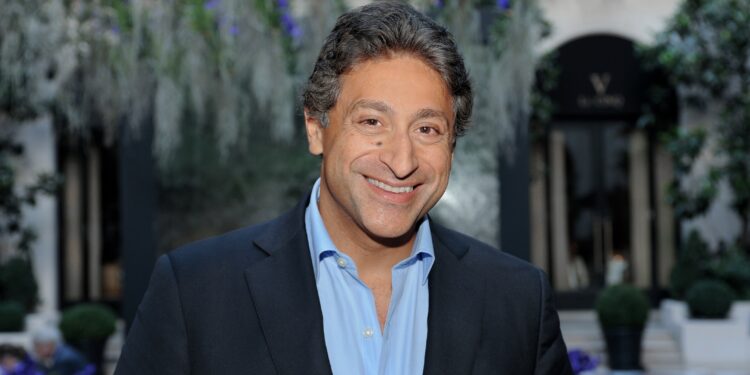
Shirish Saraf does not sound like a man seduced by modern financial euphemisms. The founder and vice-chairman of Dubai-based Samena Capital talks quickly, and swings from demographics and geopolitics to oil prices and private equity structures before concluding that, in markets where politics, currencies and exits are unpredictable, leverage and financial engineering are poor substitutes for business judgment.
“What we have to do is to create structures that enable you to ride out economic cycles” he says.
That, says the father of one daughter, is the philosophy behind Samena, the investment group he founded in 2008 to focus on South Asia, the Middle East and North Africa, whose name is an acronym of those regions.
The firm has raised more than US$1.3bn since launch and now manages approximately $274m, with $1bn returned to investors from more than 50 full and partial exits.
First money
Saraf’s career began before private equity had much of a vocabulary in India. After being born in Oman to Indian parents, he was later educated at Charterhouse, Cambridge and the London School of Economics, but as a student had no grand plan beyond entering finance. “When I graduated, I didn’t know anything,” he says. “I basically had no clue where I would go, but I wanted to get a job with some money.”
At 23, he began his career in his native India to work for a joint venture between the British venture capital firm 3i and the Australian investment bank ANZ.
“It was the first overseas private equity fund in India,” he recalls. “It was only $13m but at that time, it was the largest in India.”
He spent four years in India and then three in Bahrain, learning a form of investing that depended less on auctions but more on access, trust, and a willingness to live with local complexity.
By the late 1990s, he had become involved in the $116m acquisition of the multinational automotive distribution company Inchcape’s marketing businesses in the Middle East, described as the region’s first private equity buyout.
The Abraaj lesson
In 2002, Saraf helped found Abraaj Capital with the Pakistani businessman Arif Naqvi, a fellow LSE alumnus. In his telling, the McKinsey consultancy had suggested that the pair’s track record could support a private equity platform for the Middle East.
The idea was not universally applauded though. “No one believed our thesis that Dubai would boom, the Middle East would boom,” Saraf recalls. “They said, an Indian and a Pakistani doing private equity for the region: this can’t work.”
For a while, it did. Abraaj became the region’s largest and best-known private equity firm, with deals including Arabtec, Aramex ad EFG Hermes and assets under management of over $6bn.
Saraf left in 2007, long before Abraaj’s spectacular collapse a decade later. He frames the exit partly as personal timing. “Sometimes you just decide to move on,” he said. “As they say, in love, war, and finance you need a sense of timing.”
In hindsight, that timing became more consequential than anticipated. Abraaj went into liquidation in 2018, with Naqvi being fined $135m for misconduct by the Dubai Financial Services Authority.
Naqvi was later arrested and detained at Wandsworth prison, charged by the US Department of Justice with securities and wire fraud and conspiracy. He received the largest bail ever set in the UK, £15m, and has now spent almost three years under house arrest awaiting extradition, while maintaining his innocence.
Retirement, briefly
Post Abraaj, Saraf tried retirement. It did not last. He moved to London, wrote what describes as a novella in verse (which he hopes will be published someday), and became involved in various philanthropic ventures.
These include support for the children’s charity, Little Dreams with his friend, the rock star, Phil Collins, and the establishment of a scholarship for talented young Indians at Charterhouse, the public school in Surrey where he boarded as a boy. Then, by his own account, he got bored.
Samena was launched as the global financial crisis erupted in 2008. Saraf says he had about $300mn committed before the crash but closed the first fund at $180m. “I raised the money in just less than three weeks,” he says. It initially had three main business lines: special-situations investing, credit–fixed income and hedge fund seeding.
Gulf ruling families, high net worth families from Hong Kong, the Indian sub-continent, Asia and the Middle East along with some of the Middle East sovereign wealth funds are among Samena’s limited partners, who Saraf also calls “valuepreneurs”: entrepreneurs who have made money and are “clubbing it together”.
In 2015 an ambitious plan for Samena to take an equity stake of up to 39% in the venerable London-based merchant bank Kleinwort Benson was abandoned after the Chinese conglomerate Fosun International launched a bid for Kleinwort Benson’s parent company. Had the partnership gone ahead, the plan had been for Samena to set up a merchant banking business in Dubai under the Kleinwort Benson brand.
Plates, planes and hotels
Samena’s portfolio has been eclectic, but not random. Saraf describes the firm as sector agnostic, focused on stable, mature businesses rather than venture capital, distress or turnround.
RAK Ceramics. a global manufacturer of tiles, sanitaryware and tableware, became one of its best-known Gulf investments. Samena acquired a 31% stake from the Ras Al Khaimah ruling family in 2014 and exited in 2021 after selling its shares back for cost at approximately $103m.
In India, Eicher Motors was one of Samena’s early investments, buying in at $6m in 2009 and exiting two years later for $32.4m, producing a 214% gross internal rate of return.
Other investments have included logistics and duty-free retail players to Dynamatic Technologies, an aviation and defence supplier, which produced a 5/6 times return in rupee terms when Samena exited in 2024.
Another successful investment, in 2020, was into the Indian renewable energy company Inox Wind which achieved a 5 times return when selling out in 2024.
The Indian budget hotel chain, Bloom Hotels may prove to be the biggest payday. Saraf says the business has grown from 8 hotels and just over 400 rooms when Samena bought a 45% stake in 2018 for $35m to 73 hotels and 3,400 rooms now. “Bloom will turn out to be our most successful, in quantum terms,” he says.
A layman’s hedge
Saraf’s target investment geography is deliberate, predicated on the belief that the differing economic cycles of Asia and the Gulf can offset each other. When oil prices rise, Gulf liquidity improves. When oil prices fall, importers such as India benefit. Saraf has called this a “layman’s hedge”.
But the same geography brings shocks. Samena has owned businesses through the Qatar blockade, upheaval in Myanmar and Sri Lanka and the Covid pandemic. That helps explain Saraf’s debt aversion. “Less debt maybe reduces your returns,” he says, “but definitely in many of these markets it’s difficult to tell what can go wrong or right.”
The Covid pandemic strengthened that view. Bloom Hotels, he argues, thrived after the pandemic partly because its model had not been built on heavy borrowing.
“I’ve got almost zero debt in the companies,” he says. Higher interest rates still matter, because they depress asset prices, but they do not threaten the portfolio in the way they might threaten a more leveraged buyout book.
The yacht with ghosts
Aside from work, Saraf’s largest project over the last few years has been the restoration of the Kalizma, a 46-metre yacht, originally steam-powered, built at a shipyard in Leith, Scotland, in 1906 and later owned by film stars Richard Burton and Elizabeth Taylor.
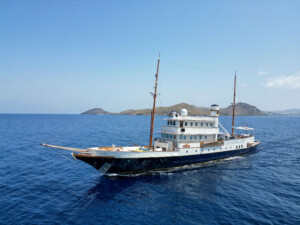
Burton bought the yacht in 1967 as a gift for Taylor, and renamed it after their daughters Kate, Liza and Maria. On board, according to the yacht’s lore, he presented Taylor with the 69-carat Cartier diamond that became part of their mythology. Saraf bought Kalizma at an auction in 2019 after finding her in a poor condition in Sri Lanka.
A changed map
Samena has downsized and refocused since the pandemic. “My main stories now are in India and Sri Lanka, and they’re doing very well,” Saraf says.
The company’s third fund, launched in 2017, had total initial commitments of around $322m but was downsized to $182m following the Covid pandemic. The fund has called 100% of its capital and has returned around 20% of its contributed capital to investors to date.
The London office, once useful as a summer networking hub for Asian and Middle Eastern capital, faded in practical importance after Brexit and Covid and was downsized following the pandemic.
The emerging markets private equity world Saraf entered in the 1990s was about persuading capital to take first exposure. As the decades long era of low interest rates came to an end, exits and return of capital to investors became harder, Saraf admits. The world he describes now is about deciding where not to be, how little debt to use, and how long to wait.