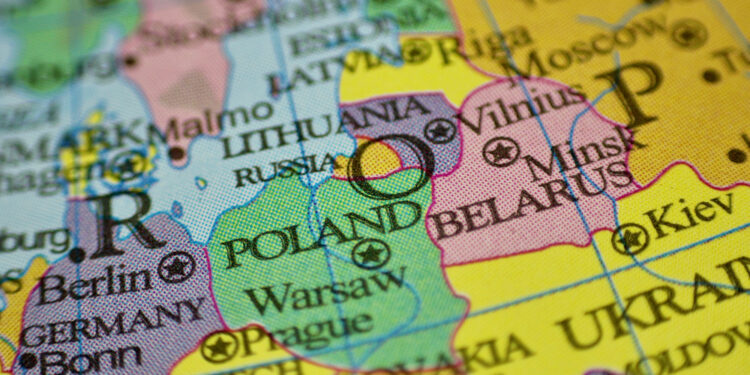
Against the backdrop of the AI euphoria and search for new tech unicorns that has dominated global investor consciousness for the better part of two years, the Central and Eastern Europe (CEE) region is poised for a promising economic and investment landscape in 2025, driven by a favorable macroeconomic environment, potential geopolitical improvements, and a series of regional catalysts.
A closer look also highlights the region’s resilience, growth prospects, and the potential for significant market upside, particularly in Poland, which stands out as a top pick for investors. Key drivers include robust investment growth, both endogenous and through nearshoring/FDI, easing monetary policy, and resilient consumer spending. The region’s equities are also expected to benefit from a potential peace agreement in Ukraine, only moderate tariffs, and equity risk premium (ERP) compression.
Average GDP over 3%
The CEE region is expected to experience an average GDP growth rate of over 3% in 2025, fueled by strong investment growth of more than 5% YoY and steady consumer spending growth of around 3% YoY. Poland leads the pack with a projected GDP growth of 3.5%, supported by substantial EU Recovery and Resilience Facility (RRF) funds, which could amount to up to 4% of the country’s GDP.
Investments in Poland are expected to grow by 8.7% YoY, while consumer spending is projected to increase by 3.5% YoY. This robust economic performance is underpinned by the region’s well-developed industrial base, which benefits from skilled yet relatively cheap labor, low taxes, and a business-friendly environment. These advantages are also key in attracting foreign direct investments and nearshoring. For instance, Poland and Hungary have been on the receiving end of steady inflows (4%-5% of GDP on 2022-2023) in high-value added sectors in sectors like semiconductors (Intel), electric vehicles (BYD), batteries (CATL) and electrical appliances (Miele).
Potential upgrades
The moderation of inflation across the region is expected to provide central banks with room for monetary easing, further supporting economic activity and financial markets. Interest rate cuts of 150 bps in Poland, 100 bps in the Czech Republic, 75 bps in Hungary, and 50 bps in Romania are anticipated, creating a favorable backdrop for corporate earnings growth and equity market appreciation.
Potential country upgrades further enhance the region’s attractiveness. Romania is awaiting requalification to Emerging Markets in MSCI indices, while Poland is likely to achieve Developed Market (DM) status following the 2025 review. Greece is also making progress toward DM status. These upgrades could lead to increased foreign investment flows and a re-rating of regional equities. Additionally, the region’s lower public and private debt levels relative to developed markets (approximately half) allow for continued supportive fiscal initiatives and private sector growth.
Poland is indeed the most positive story in CEE, with strong EPS growth of 35% year-over-year in 2025
Indeed, they have maintained strong price momentum, with the region being the second-best performing global region over the last three years, with a 7.2% annual return, despite the hot war being waged next door.
The region’s low correlation with global markets allows for risk diversification, and its deep valuation discount relative to global emerging markets (approximately 40% discount) presents significant re-rating potential. Developed market risks, such as high multiples in the US and the concentration of the rally in a handful of big tech names, further increase the attractiveness of CEE equities. The region is expected to deliver robust earnings growth of over 13% in 2025, with attractive dividend yields of over 6%. The return of foreign institutional investors, with equity inflows in Poland more than doubling in 2024 compared to 2023, further underscores the bullish prospects of the region.
Poland is indeed the most positive story in CEE, with strong EPS growth of 35% year-over-year in 2025, low valuations (P/E of 8.2x, 30% below historical average), and significant EU RRF funds (up to 4% of 2025 GDP) providing a tailwind for equities and the zloty. The return of foreign investors, with over $1.73 billion in equity inflows in the first 11 months of 2024, further supports the bullish outlook. The country has access to EUR 60 billion from the EU Recovery and Resilience Facility (7.8% of GDP) and EUR 76 billion under the EU Cohesion Policy for the 2021-2027 period (over 10% of GDP). These funds are expected to fuel a surge in investment growth in 2025-2026, making investments a key pillar of Poland’s economic growth. The improvement in corporate governance, especially in the SOEs, and the further development of capital markets have been among the key priorities of the Polish government and are also beginning to bear fruit.
Higher for longer
From a sectoral perspective, financials in the CEE region show strong promise as the economy recovers, lowering loss provisions and boosting credit activity, especially in the corporate lending segment, which is expected to pick up on the back of RRF investments and potential Ukraine reconstruction. “Higher for longer” is also not fully priced in by the market, especially in Poland, where in our view the CB’s easing pace will likely be slower than expected. Value-wise, the sector is quite appealing. Polish banks, in particular, are expected to normalize their ROE to around 14% and maintain strong dividend yields of over 6%. The consumer sector in Central Europe also offers strong growth prospects, taking advantage of the region’s strong internal demand, with household income in the CEE region at 52% of the Eurozone average and growing at 3% per annum.
Potential diplomatic solution
The most important positive catalyst with tremendous potential impact, which as of yet is still widely disregarded by the market, is, in our view, the potential diplomatic solution to the Ukraine war which has become much more likely with Trump’s re-election. We expect it to lead to a short-term equity rally, followed by long-term earnings growth for regional companies involved in reconstruction efforts.
The contours of such a deal would likely guarantee the preservation of Ukraine as an independent and economically viable state with access to the Black Sea, even if it involves some territorial concessions in the Donbass. This kind of deal, addressing the security concerns of all parties, would establish the foundation for sustainable peace, essential for the return of millions of Ukrainian refugees and the genuine rebuilding of the country.
Among the companies poised to benefit from the end of the war are Raiffeisen Bank and OTP Bank
The World Bank estimates that Ukraine will require approximately $486 billion over the next decade for comprehensive recovery and reconstruction efforts. The CEE region, due to its proximity, industrial base, and energy independence, is best positioned to benefit from these reconstruction initiatives. Companies in sectors such as construction, materials, heavy machinery, energy infrastructure, waste management, shipping and logistics, and healthcare are expected to benefit initially. In the longer term, companies with Russian/Ukrainian business currently in limbo, as well as those looking for expansion opportunities in consumer discretionary and staples, HR, and other sectors, will also benefit.
Banks due to benefit
Unpacking this further – among the companies poised to benefit from the end of the war are Raiffeisen Bank and OTP Bank, which could see relief from regulatory pressures related to Russian exposure and a smoother path to divesting from their Russian operations. LPP S.A., a fashion retailer, could rapidly scale up expansion in Ukraine post-war. Jeronimo Martins, a leading food retailer in Poland, is also well-positioned to expand into Ukraine, while Wizz Air could benefit from increased travel demand and tourism to Ukraine post-war. Other companies, such as Budimex, a leader in Poland’s construction sector, and PKP Cargo, Poland’s largest freight operator, are also well-positioned to participate in the Ukraine reconstruction efforts and the related increased cross-border transport and logistics demand.
In conclusion, the CEE region, and Poland in particular, offers a compelling investment case for 2025. With a favorable macroeconomic backdrop, potential geopolitical improvements, and significant EU funds supporting growth, the region is well-positioned to deliver strong returns for investors. The potential end of the Ukraine war and the subsequent reconstruction efforts further enhance the region’s attractiveness.
As global investors seek alternatives in the emerging markets space, the CEE region stands out as a promising destination with solid catch-up potential. The combination of strong economic fundamentals, attractive valuations, and significant growth catalysts makes the CEE region a key area of interest for investors looking to capitalize on emerging market opportunities in the coming years.
*Konstantin Prodanov, chief investment strategist, Karoll Capital Management