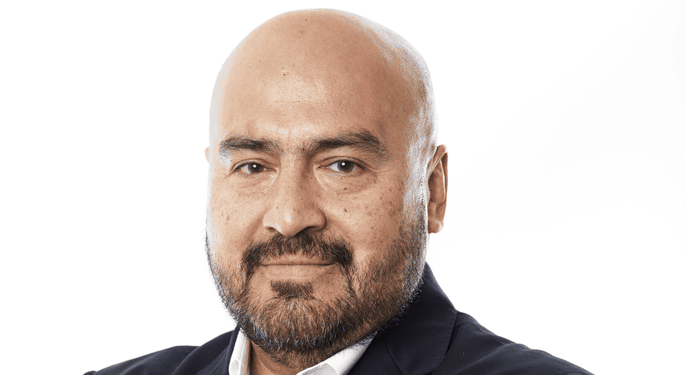
In a few short years, Pino Vallejo has gone from entrepreneur to global CEO. He left a long banking career in 2015 to start his own consulting business – Sionic – which was acquired by Davies in 2021. He was then appointed as CEO of the newly created consulting division of Davies, which has over 8,500 employees and around 1,800 clients.
What learnings have you taken from starting your own consultancy as an entrepreneur and later on becoming CEO of the consulting division of Davies? How has your mentality had to change as you’ve transitioned between those roles?
The main learning I have taken from my career is to be bold and take opportunities. As any entrepreneur will know, striking out on your own takes a huge leap of faith, but it can bring great rewards. Similarly, when Sionic became part of Davies it opened up a range of opportunities for me and the company.
Naturally, in a company the size of Davies you can approach problems differently because you have so much more knowledge and resource available. We are able to leverage our global footprint to help our clients expand. And we can also approach problems in a much more holistic way by drawing on expertise from across the Davies family – our clients get access to valuable insight across the breadth of our technology and professional services offering.
From a personal perspective, becoming CEO of the consulting division was a very proud moment for me. I’ve been lucky enough to have a very varied career and I think one learning is that while you might not know exactly where your path is leading, the experiences you pick up on the way will all become useful in the future.
What keeps you awake at night now, vs when you started out as an entrepreneur?
Five years ago, I would worry about the next projects and our growth, particularly during Covid when obviously all organisations faced tough times.
During Covid, firms just wanted to survive, whereas now there is a sense of optimism, and organisations are focused on maximising growth.
The market has changed a lot since then. During Covid, firms just wanted to survive, whereas now – while there have certainly been tough times in recent years there is a sense of optimism, and organisations are focused on maximising growth.
I’ve certainly learnt to be adaptable and agile, and I suppose that’s the main thing that I am focused on. The world changes so fast – if you think, for example, about how far technology has come in even the last five years. There are huge opportunities to leverage AI and machine learning, for example. There is never time to stand still and there is always a new challenge coming around the corner.
Sometimes you work hard and you still don’t succeed, so you have to dust yourself off and work harder.
We recently conducted some research which found that almost two thirds of firms admit to being risk averse when it comes to technology. The risk of not embracing technology and of not keeping pace with its development, is getting left behind. As a company that is relied upon to advise clients on how to improve their efficiency and their offerings, I’m very aware that we need to lead by example and remain at the forefront of innovation.
What is one of the key lessons from your career that you’d like your children to take on board?
They need to learn to fail.
And that might sound cruel, but you can learn a lot from failing. They need to learn that nothing comes automatically and that they have to work for success. Sometimes you work hard and you still don’t succeed, so you have to dust yourself off and work harder. That is what I’d like my children to learn.