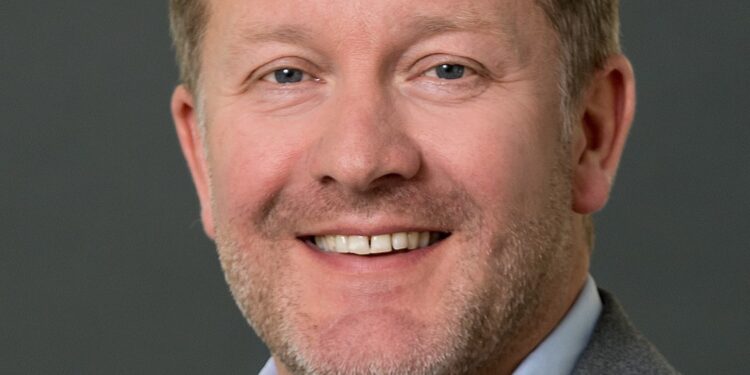
Q: How do ETFs fit into VanEck’s overall product strategy? What has driven your growth and decision-making?
A: We’ve always acknowledged that we’re not an iShares or a Vanguard. Instead of replicating broad benchmarks like the S&P 500 or MSCI World, we’ve focused on launching highly specific ETFs, such as one of the first international equity ETFs in the US, and early funds targeting gold and emerging markets before they were trending. Our success really accelerated with the launch of the Video Gaming and Esports ETF in June 2019. That was the moment we realised that a sharply defined theme could meet real investor demand. Since then, we’ve leaned into thematic ideas. Think of us as the craft beer of ETFs.
Q: Are you focused on launching new ETFs or embedding ETF share classes into existing funds?
A: In Europe, our focus is squarely on ETFs. The active mutual fund business is highly competitive and, frankly, in decline. ETFs offer a more scalable and transparent model.
Q: How do you determine your distribution strategy – where to distribute and through which channels?
A: When I joined VanEck in 2018, we already had a presence in core European markets, but everything was in English. We shifted to a local-language approach and built sales and marketing teams to engage with local investors. That made a real difference. Early on, we targeted retail investors due to our shorter track record and smaller AUM. It was a scaffolding strategy – starting small and growing upward. We’ve gone from €3.5 billion in assets in 2018 to €28 billion today.
We’ve leaned into thematic ideas. Think of us as the craft beer of ETFs
We’ve also expanded our footprint selectively. Our core markets were the UK, Netherlands, Germany, Switzerland, and Italy. Over the past few years, we’ve added the Nordics, Poland, Austria, France, and Spain. The Nordics and Southern Europe were slower to adopt ETFs, but that’s changing.
Q: How do institutional investors differ from retail?
A: Retail investors are drawn to themes they believe in and past performance. Institutions are more focused on fees, replication method (synthetic vs. physical), securities lending, and tracking error.
Q: What are the critical steps in choosing a fund domicile? Do you have a preferred European domicile?
A: I founded Think ETFs and chose the Netherlands due to its favourable tax treaties, especially for Dutch investors reclaiming dividend tax. While Ireland is popular, Dutch-domiciled ETFs can offer better gross dividend recovery for certain investors. That said, Ireland remains a strong choice due to its broad treaty network. For our crypto range, we use Liechtenstein because of its robust regulatory framework.
Q: Will your ETF range focus more on active or passive strategies going forward?
A: I think the definitions of “active” and “passive” are flawed. What’s often called passive is really rules-based investing. True active management involves subjective decisions, which are hard to consistently get right. I believe in removing emotion from investing. Academic research shows it’s extremely difficult to outperform the market consistently. Diversification and low costs are key.
I used to trade options and once invested heavily in a supermarket chain I thought I understood inside out. Then came a bookkeeping scandal in 2003, and the stock collapsed. That experience taught me it’s impossible to know everything about a company. The best approach is to diversify and avoid trying to be the smartest person in the room.
Q: What milestones have marked the evolution of ETF awareness?
A: Some 15 years ago, I’d present to retail investors and ask who knew what an ETF was – only a few hands would go up. Now, most people are familiar with the term. That shift in awareness has been a major milestone.
Q: What advice would you give to new entrants in the ETF market?
A: In hindsight, the challenges were immense. Today, it’s even harder – regulation is tighter and costs are higher. I’d say it’s nearly impossible without strong backing and funding.