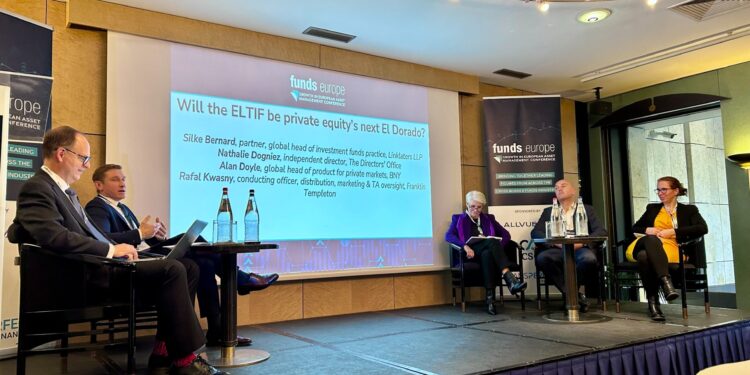
Europe is on a journey to catch up with the US in the mainstreaming of private assets, and the second iteration of the European Long-Term Investment Fund (ELTIF) is key to that transition.
That was the perspective of speakers at the Funds Europe Growth in European Asset Management Conference in Luxembourg today.
In a panel debate on whether the ELTIF was ‘the next El Dorado for private equity’, Rafal Kwasney, conducting officer, distribution, marketing & TA oversight, Franklin Templeton, praised the progress that had been made with the ELTIF 2.0, which was introduced in 2023, ironing out many of the problems of its predecessor.
Kwasney said: “The ELTIF is a move in the right direction with the aim of getting non-professional investors into private market assets. “The numbers confirm that since the launch in 2023, the growth is 30 per cent year over year, with over 250 entities at the end of the year €28bn in assets. It is still a niche product even though it is going to double in assets in the next two years. “The main challenge is on the operational side. We’d like to see ELTIFs being able to invest in non-EU AIFs to broaden the portfolio scope. We’d like to see less strict eligibility criteria, where one portfolio position can disqualify the product. We’d like to see a possibility to borrow for redemptions – things that are available for other products.”
ELTIFs and private assets encompassed by Funds Europe Luxembourg conference
Alan Doyle, global head of product, private markets, BNY, described how Ireland was beginning to target this sector in which Luxembourg had seen successful fund launches. Doyle said: “We have probably seen 7-10 years of growth [in Ireland] in what we call retail alternatives, with up to 70 or so firms active at present, but really only within the last three to five years. At BNY, we have low double digits in terms of clients in ELTIFs at present. And we are just going live with our first relationship.”
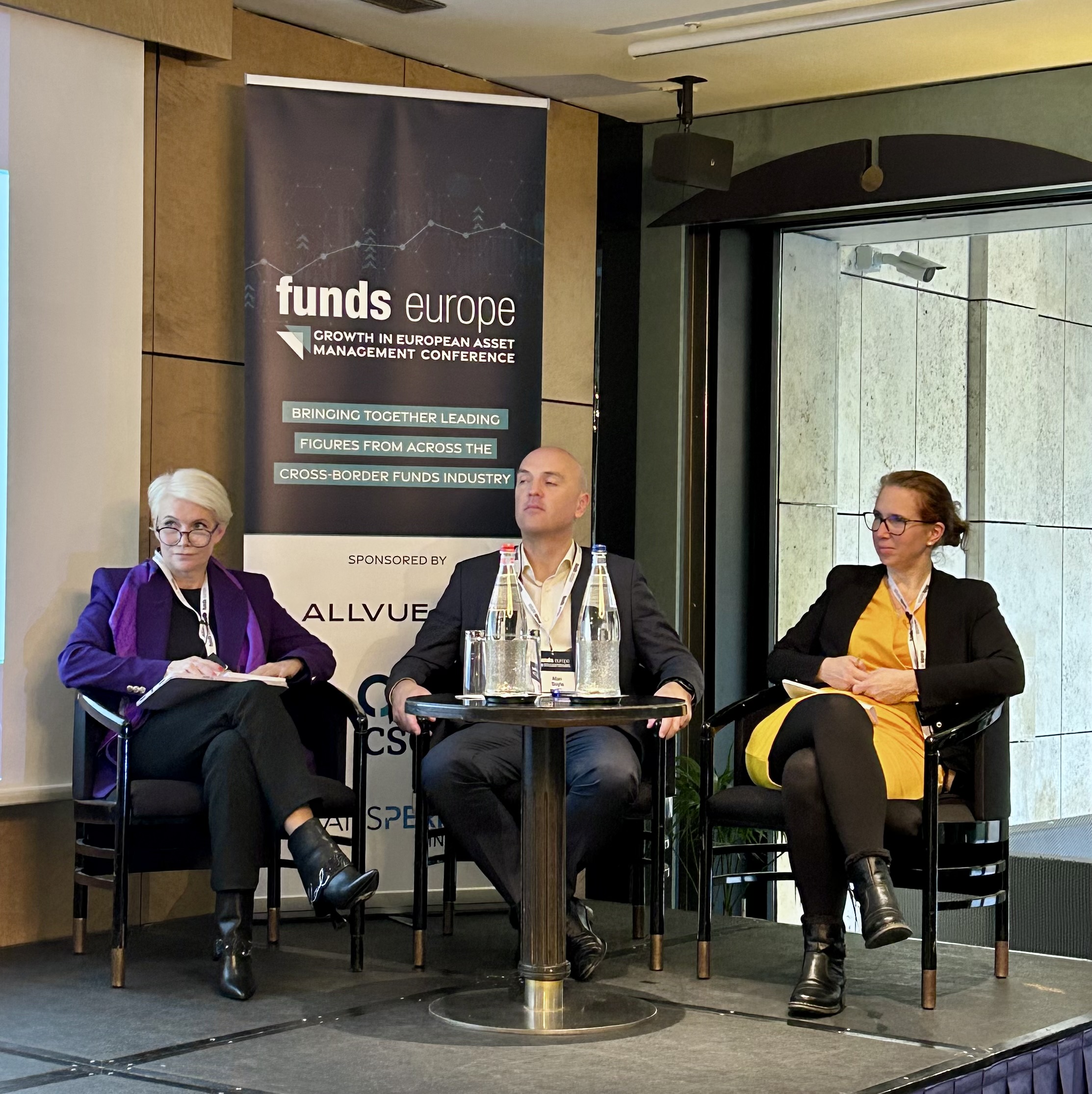
For Silke Bernard, investment funds partner, global head of investment funds practice, Linklaters, there have been three changes on ELTIF 2.0 that have made a difference. She said: “On the structuring side, how can you structure your upstream and downstream; changes on the marketing, how we get to the investor; and then the eligibility rules. These are the three big changes. “I have a lot of clients that create funds of funds to open up these factor funds to retail investors, allowing them easy and separate access, which is retail-suitable, and which is also diversified access to a number of funds.”
“We have the master feeder that is opening up – it is a bit more challenging in reality, but it can be used and for some reasons, it is a really nice tool if you have local tax advantages. In Italy or Spain, you have specific tax rules, so the structure can work well. There are some challenges in France, however.
Not all [ELTIFs’] problems are solved and we have our Christmas wish list – having access to US target funds would be welcome, for example. But eligibility rules have been made less restrictive. So we are getting closer to ELTIF being private equity’s El Dorado, but there is still a way to go,” said Bernard.
Luxembourg regulator: “Europe cannot wait another 33 years.”
Nathalie Dognie, independent director, The Director’s Office, highlighted how the ELTIF has been adapted to ensure the risk of a repeat of the financial crisis of 2008 is minimised. She said: “Many of the regulations are leveraged on the lessons of the financial crisis of 2008/09. We have short memories, so it is worth remembering how the 2008 financial crisis started. It started with a tiny area of assets, a small area of sub-prime mortgage loans, real estate loans in the US that were securitised and sold. It turned out the loans were of poor quality. When the market realised this, faith in all the securitised assets, and the banks and the funds that had securitised assets in their portfolio were facing problems, because the assets were illiquid.
So funds were struggling with redemption requests and had to go through fire sales and some banks went bankrupt.
“The butterfly effect meant the lack of trust spread to the entire financial market. So the lesson is that trust is free, and trust can be lost very quickly.
Bernard added: We have improved on the credit management, and CSSF, when approving ELTIF funds, focuses on the liquidity management plans. “Secondaries are an area where ELTIFs wish to invest. We have two challenges. First, we can only invest in certain European funds – we can’t include US funds. We tried to lobby, but the EU Parliament was against it.”
Dognie added that the ESG sustainability reporting changes included in the Omnibus amendments to CSDR requirements would reduce access to sustainability reporting. She said: “As the Draghi report has mentioned, financing the transition in Europe is essential – and critical for EU sovereignty for energy. We see some political shift in Brussels, for example, the omnibus, which could jeopardise this. Omnibus is not about simplification – it is about more cost for the investors and it reduces the number of companies that are reporting. Omnibus is shrinking the number of companies that will do the reporting to a very small number of big companies.
You will have fewer companies reporting, so investors will have to fight to get information and pay to get information. That will make investment in the transition more expensive. And threatening the entire Green Deal plan.”