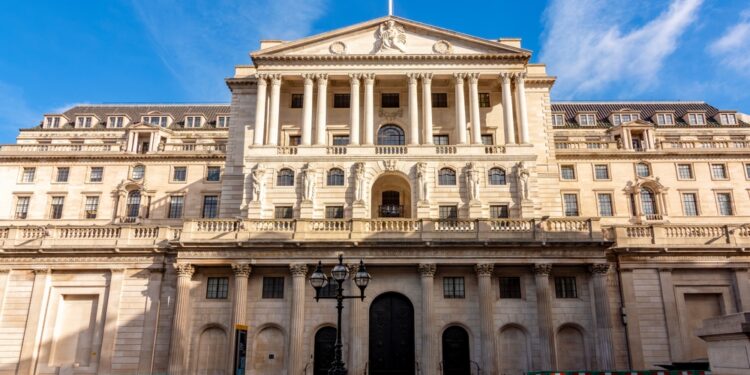
The Bank of England’s quarter-point rate cut to 4.25% has triggered a wave of reactions across the financial sector, with consensus on the need for action but division over whether the BoE has done enough to confront the challenges ahead.
“The Bank of England’s decision to cut rates today came as no surprise,” said Zara Nokes, global market analyst at J.P. Morgan Asset Management, noting that the UK economy is being hit by a “double whammy” of domestic tax hikes and trade friction from the US. These pressures, she said, are eroding business confidence and beginning to crack the labour market. While she welcomed the Bank’s move, she warned against over-committing to a series of deep cuts just yet, especially with April inflation likely to have spiked due to rising employment costs and price resets.“ One would expect a cooling labour market to take some of the heat out of inflation over the course of the year,” Nokes explained, “but until there is concrete evidence of this, the Bank should maintain a degree of caution.”
“This decision smacks of hesitation at a time when speed and scale are what matter most,” said Nigel Green, CEO of deVere Group, criticising the BoE’s cut as insufficient given the scale of economic threats. He argued that a 50 basis point move would have sent a stronger signal of leadership and resolve. “Central banks aren’t there to observe; they’re there to lead,” he added. Green pointed to softening consumer demand, declining business investment and mortgage market weakness as signs that stronger intervention was needed. “If the destination is clear, why take the longest road to get there?” he asked, referring to market expectations of three further rate cuts this year.“
BoE rate cut sparks inflation concerns
Patrick O’Donnell, senior investment strategist at Omnis Investments, described the Bank’s situation as “tricky,” caught between high inflation and slowing growth. He noted that market expectations had remained fairly stable going into the meeting, fully pricing in a 25bps move. O’Donnell noted that the more dovish voting skew may help UK markets at the margin, though he added that volatility is expected to remain for the foreseeable future.”
The split vote—with two members favouring a hold and two calling for a larger 50bps cut—came as a surprise relative to consensus expectations for an 8-1 vote, highlighted Lauren Ledger-Evans, assistant portfolio manager at Ninety One. “This, alongside the Bank’s decision to maintain its ‘gradual and careful’ guidance, signals a reluctance to move more quickly despite growing downside risks.”
The BoE is still expected to ease rates further over time, Ledger-Evans added —likely toward a neutral range of 3–3.25%—the policy reaction function now appears more data-dependent. “A deterioration in hard economic data, particularly around the labour market, may be needed to justify a faster pace of cuts. As a result, our near-term conviction in UK front-end duration has been tempered.”
While the BoE may be hoping that measured steps will anchor stability, critics like Green argue that a more aggressive stance is what the moment demands. “Sometimes, the safer move is the bolder one,” he insisted, warning that “slow and steady easing may suit textbook theory, but it won’t lift confidence, unlock lending, or shield the UK from the fallout of a destabilised global trade regime.”