Whether the year 2025 will constitute an inflection point in the development of cryptoasset markets will depend on several factors. Regulatory convergence (or lack thereof) and the rise of tokenisation, will play important roles.
From smart contracts facilitating the automation of existing investment operations, to fractionalisation and digitalisation of real world and financial assets, up to the ease of cash management and value transfer provided by the rise of stablecoins, it is not too much of a stretch to picture an investment industry that could soon look very different. Add to this view the developments in machine learning or AI, and an emerging inflection point looks more and more plausible.
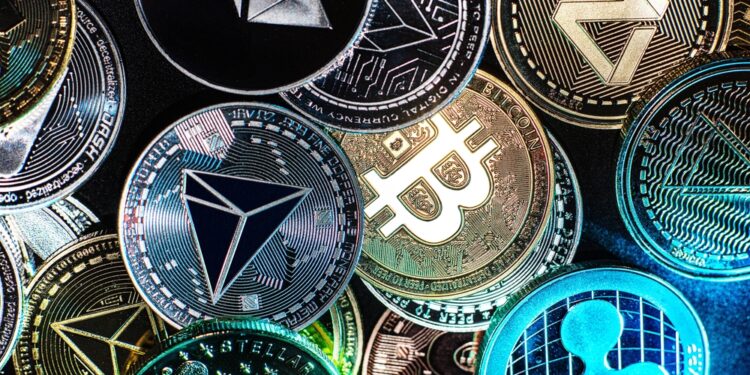
The global market capitalisation of all cryptoassets reached another record in 2024, passing US$3.0 trillion. That we continue to measure the size of cryptoassets according to their fiat currency value is itself a point of contention – or perhaps irony – and is indicative of a still immature market.
Bitcoin continues to represent the lion’s share of the market, at least in terms of market value, with about $2.0 trillion early in January 2025. Ethereum trails in second place with north of $400 billion. The top 20 cryptocurrencies represent about 90% of the total market value.
Digitalisation could further reduce costs
More interesting, however, is the development of smart contract enabled coins and so-called “altcoins”, along with stablecoins. Today these represent most cryptocurrency transactions (in number). Underpinned by distributed ledger technology (aka blockchain) and cryptography algorithms, we think this area constitutes the most interesting aspect of digital finance. Through decentralisation and process automation, the digitalisation of financial services could further reduce costs and frictions when compared to traditional finance and its layers of intermediation.
This was the premise of our recent CFA Institute critique – called An Investment Perspective on Tokenisation. Part I – of the development of tokenisation, which is the act of creating a digital representation of real world or financial assets using distributed ledger technology. Digital tokens are used to effectuate the transfer of value and prove ownership of either fully native digital or real-world assets.
The irony from the variety of hybrid models that can be used is that the level of interoperability is still low, which in turn generates meager liquidity for the various tokens
The total value of tokenised assets has risen steadily since really taking off in 2022. According to platform RWA.xyz, their total value stood at around $17.0 billion as at early February 2025. The most popular sources of assets for tokenisation have been private credit in a variety of forms, as well as US Treasury securities.
Based on a series of interviews we conducted in 2024 with firms involved in different ways in asset tokenisation, we’ve explored the merits of the process as well as problems and weak points.
A first important observation to make is that is there is no single or dominant method used for tokenising assets, yet. The variety of models and degrees of complexity are telling. The technology used to conduct such operations is not mature nor definitive.
Tokenisation models range from using fully decentralised and public blockchains aiming for maximum interoperability, to private networks focusing on security and control. The notion, therefore, that all processes claiming to make use of DLT are decentralised is incorrect, and it depends on the characteristics sought for the network or the form of interaction between the issuers and the investors or users.
Clear benefits from tokenisation revolve around the parts of the asset management value chain closest to typical middle and back-office operations, including clearing and settlement or risk controls. Through smart contracts, operations can be automated and hard-coded into the tokens themselves. This facilitates the various tasks involved in reconciling positions between the various parties to a transaction.
Tokenisation also may facilitate and compound the advantages of fractionalising typically illiquid and sophisticated assets such as private funds, commodities, or art collectibles. Technology then makes it possible to easily and securely create shares and transact such fractionalised shares in the form of tokens.
Not without flaws
The process is not without its flaws, however.
By definition, online processes are more exposed to cybersecurity and custody risks, which need to be seriously addressed by the industry, eventually through strong regulatory standards. The irony from the variety of hybrid models that can be used is that the level of interoperability is still low, which in turn generates meager liquidity for the various tokens, which could generate market risk and potentially systemic risk, depending on the interlinkages between digital finance and traditional finance.
Two major issues should be addressed. First, the difficulty of identifying with certainty the issuing entity, when the level of decentralisation is high, which renders the identification of the chain of responsibility complex depending on the circumstances. Second, the legal framework within which those processes take place is not yet mature enough that the laws governing property rights are clearly enforceable, especially when dealing with real world assets transacted through digital tokens.
Finally, the regulatory frameworks in key jurisdictions are not yet on a path towards harmonisation. The current atmosphere is actually one of deregulation or search for competitive advantage. For an industry that is, by definition, stateless or borderless, this means that global regulatory clarity will have to wait.
The EU struck first with MiCA in 2023, but left parts of the market unaddressed, including DeFi or unbacked decentralised digital assets, like bitcoin. In the meantime, the US remains the largest market for crypto transactions, while its legislative framework is still being discussed. Certain Asian markets like Singapore have chosen a rather pragmatic approach, focusing on existing securities laws for assets that exhibit securities-like features.
The market for tokenisation of real world and financial assets is definitely interesting and could provide the further impetus needed for the market to continue its progress and maturing. However, there are gaping holes in this development, mostly from a clear lack of regulatory harmonisation and property laws that are not yet updated for a digital world.
Measuring the adoption of tokenised assets by regular investors will be key in determining if the horizon is clearing for the digitalisation of finance.
*Olivier Fines, CFA, is head of advocacy and capital markets policy research at CFA Institute. Olivier will be a participant in FundsTech Forum 2025, speaking about the transformative power of tokenisation in asset management. See agenda here.
Mike Tumilty, COO Aegon AM, gives keynote interview at FundsTech Forum 2025
CEO Joseph Pinto to give keynote interview at FundsTech Forum