US-based WisdomTree has expanded its range of ETFs providing exposure to metals driving the energy transition with the launch of a strategic Metals UCITS ETF.
The fund aims to track the price and yield performance of the WisdomTree Energy Transition Metals Commodity UCITS Index and has a total expense ratio (TER) of 0.55%.
The ETF listed today on Frankfurt’s Börse Xetra and Milan’s Borsa Italiana, alongside a euro-currency hedged share class.
The ETF will list on the London Stock Exchange tomorrow alongside a sterling-currency hedged share class.
The strategy expands WisdomTree’s partnership with energy consultancy Wood Mackenzie and is the sixth ETP WisdomTree has launched leveraging Wood Mackenzie’s industry expertise.
It also complements the recently launched WisdomTree Energy Transition Metals and Rare Earths Miners UCITS ETF, giving investors the choice to access this theme through equities or commodities.
The ETF is classified as an article 8 SFDR fund and allows investors to access commodities associated with energy transition themes such as electric vehicles, transmission, charging, energy storage, solar, wind and hydrogen production.
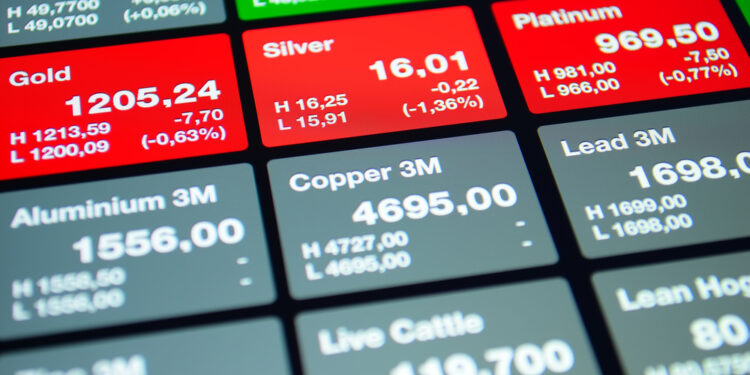
The portfolio is currently comprised of copper, nickel, aluminium, silver, zinc, tin, lead, platinum, lithium and cobalt. It rebalances twice a year with a regular review process to assess if additional commodity metals can be added depending on the inclusion criteria, such as relevance in energy transition themes and liquidity.
Nitesh Shah, Head of Commodities & Macroeconomic Research, Europe, WisdomTree, said: “Metals will be crucial to advance the energy transition. Whether it is to power more electric vehicles or create solar panels, it’s hard to see a world where the development of energy transition technologies is not dependent on the supply of some key metals.
“However, the challenge is to ensure that the technologies needed to achieve the energy transition are produced at scale. The challenge for investors is to navigate through the dynamics of technology shifts, trade policies and sudden increases in metal supply.”