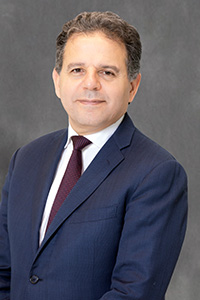
Private markets can play a “fundamental role” in closing the ESG financing gap and unleashing the potential of impact investing, according to Joseph Pinto, chief executive of M&G Investments.
However, there are some challenges around data quality, liquidity risk and investor awareness that will have to be overcome if these ambitions are to be reached.
Pinto was speaking at the European Investor Summit held by Societe Generale Securities Services at its Paris headquarters this week.
Climate change, social inequality and resource scarcity are not only social and environmental concerns, they are also economic imperatives that are quickly becoming drivers of value creation and promoters for impact investing.
This is partly due to the massive financing gap that exists in the green energy transition and meeting various ESG targets.
According to the 2024 Financing for Sustainable Development Report, released in April this year, the development financing gap stands at more than $4.2 trillion annually, up from $2.5 trillion before the pandemic.
That money will have to come from private capital, said Pinto. “I don’t think public states will have enough money to fund that gap. Private markets can play a fundamental role.”
“[Private market funds] provide the flexibility and access to unique investment opportunities,” said Pinto. “They are the engine of innovation and entrepreneurship. They are typically focused on the startups we need to drive our ESG issues.”
Some private market asset classes are more suitable than others when it comes to impact investing and ESG. For example, the burden of ESG requirements is highest in the private equity space, while infrastructure and natural resources are natural fits for ESG.
The level of ESG funds within the private credit space is somewhat flat and while there is potential for ESG within real estate funds, the asset class is still facing challenges in terms of valuations across Europe and the UK especially.
There are other obstacles involved too, said Pinto. For example, there is a need for standardised impact measurements to help with reporting.
Interest rate increases have had an impact on some sub-categories with a steep fall in IPOs and barriers to accessing funding which further increases the transition financing gap.
Private markets also need to be more accessible to a wider range of investors while those investors need to be aware of the liquidity risks involved.
Pinto did also highlight some ways these challenges can be met. For example, industry intervention can help. The Netherlands Advisory Board on impact investing has called for a minimum of 10% of AuM to be allocated to impact investing by 2025.