Space.. the final frontier. Once the advantage of the market cap index was that it weighted and rotated new winners through supply-demand. There has always been index concentration but there was once equilibrium. Today’s equity market is no longer a calm Newtonian system of diversified orbits. It has become a distorted cosmos, bent by the mass of mega-caps, AI IPOs and oversized ETFs. The question is no longer whether indexation creates gravitational effects; it is how deep the well has become, and whether allocators are prepared for the tidal forces that follow.
As I recently co-wrote with James Clunie, director at Long Short Consulting, in our source paper entitled ‘Gravity Wells in Beta: Using Absolute Return to dial down Mass Effects’, we outlined that “large-scale indexation, Big Tech IPOs and oversized ETFs create measurable index ‘gravity’ around the largest market capitalisation constituents,” a gravity formed through inclusion premia, predictable rebalances and tracking‑error–driven allocation. These forces “support index beta but also raise concentrated stock and valuation risks.”
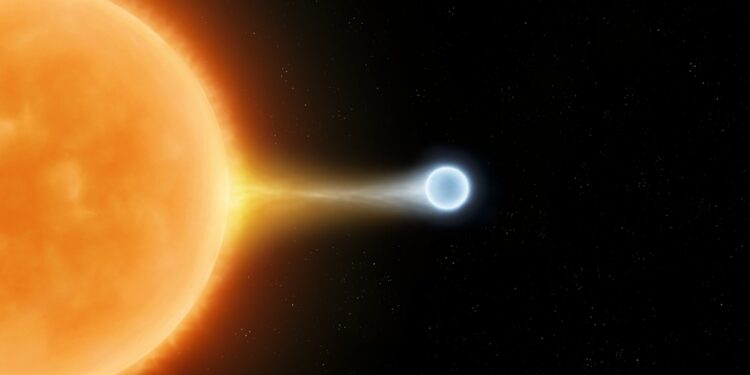
Today, that gravity is intensifying. The arrival of SpaceX, OpenAI and Anthropic, from private into public markets, pose more than a gentle perturbation; they are celestial like a pulsar* entering a solar system, a compact, spinning neutron star whose gravitational field is so steep that it drags nearby bodies into new orbits. As our main paper notes, “objects that once moved independently would begin to orbit the pulsar’s gravity well, their paths altered by a new, dominant mass.” That is precisely what Big Tech and AI have become: a concentrated mass of capital bending the flow of investment, as private markets seek to leverage capital, by floating onto the public market, and thus accessing the vast universe of investors.
SpaceX’s IPO onto the NASDAQ 100 alone created “enormous demand and immediate price pressure on debut,” while the S&P 500’s leadership has narrowed to a handful of “Mangos”, the mega-cap elite whose gravitational pull now defines market beta. This then is not a healthy solar system. It is a system in which:
- liquidity is redirected toward the largest bodies
- volatility patterns synchronise
- formerly independent stocks become correlated passengers
- breadth collapses
- valuation risk concentrates in a single well.
If that gravity ever wanes be that through; liquidity stress, regulatory shock, or a simple reversal in sentiment then the bodies trapped inside it will not drift gently outward. They will be flung. Index ‘gravity’ then is not a metaphor, it is a measurable market structure effect created by:
- market‑cap weighting, which channels flows into the largest names and relaxing index rules have rocketed speculative IPOs
- ETF creation/redemption, which reinforces and anchors those positions
- tracking‑error constraints, which force active managers to be pulled closer to the index (benchmark) positions.
Most investors view tracking error as a risk control. In a concentrated market, it becomes a risk amplifier. As the paper summarises, “core active managers… are constrained to tight tracking‑error budgets; this can mechanically align active flows with index moves and reduce cross‑sectional dispersion of bets.” The result is a self‑reinforcing loop:
- Mega-caps grow
- Passive flows amplify their weight
- Active managers, fearing TE breaches, move closer to the index
- Dispersion falls
- Correlation rises
- Beta becomes a hostage to a handful of stocks.
When the top 10 stocks dominate the index, a low tracking error mandate forces active managers to own them, even if they believe they’re overpriced. As one study cited in the main paper warns, “constant tracking error is the enemy of the skilled diversified manager” when concentration rises.
This is the ‘gravity well’ and the evidence is not merely theoretical; joining up various pieces of research point to this phenomenon. To quantify this, our new paper introduces a simple but powerful construct, a new fund equation for Gravity. This gravity means that:
- low‑active‑share funds are pulled hardest towards an index
- high‑active‑share funds resist, but not fully as gravity ripples through the investment universe
- passive funds display little response as they sit at the centre of the gravity well.
This is the first step toward a more dynamic understanding of how index structure affects portfolio risk. This is the tail risk that no one is pricing yet. If gravity wells exist, and the evidence increasingly suggests they do, then allocators must ask: how do we hedge the tail‑risk inside an index? The answer is not adding more Beta. Instead, a number of anti-gravity strategies such as absolute return long-short and short-extension funds are uniquely positioned to:
- short the most expensive concentrations in the gravity well
- maintain a stable Beta overall
- harvest factor premia on the long leg (capturing returns above Cash)
Absolute return strategies are nothing new and have been around since the 1940s, it is not an asset class nor a single strategy but rather an investment approach, used by investors who want to focus on capital preservation and consistent growth, regardless of market conditions. Related to these are short-extension funds that can invest say 130% of the fund’s value in long positions and 30% in short positions resulting in 100% market exposure. Long-short funds by their name hold certain parts of the market and bet (short) against other parts. For example, Fortem’s Absolute Return Fund runs “a long factor‑optimised global equity sleeve and a ~70% short of the global parent index to target ‘Cash +2% with low, stable market beta’.” This is neither a replacement for passive nor core active allocations; rather it is a counterweight, a structural hedge against the systemic risk created by index gravity.
What allocators should do
- Adopt dynamic TE allowances: Fixed TE is a relic. Concentration is not constant; TE constraints shouldn’t be either.
- Use concentration‑aware benchmarks: Equal‑weight, systematic‑weight and diversified‑risk indices reduce gravitational pull.
- Add absolute return and other hedging sleeves: Not as a tactical trade, but as a structural component of a modern Beta portfolio.
- Monitor liquidity stress: Gravity wells behave smoothly until they don’t. Outflows accelerate dislocations.
- Model gravity explicitly: Use our new Gravity and effective Tracking Error framework suggested to understand how portfolios behave under distortion.
To boldly go
Indexation has democratised markets. ETFs have improved liquidity. But the rise of AI mega-caps and private‑market intrusions via IPOs has created “measurable gravitational effects on Beta… amplifying concentration and valuation risks.” The gravity well is real. It is deepening. And allocators must decide whether they will continue orbiting a pulsar, or build the hedges that allow them to escape it. Live long and prosper!
Notes:
Introduced in the main paper, the term for index Gravity G then where C = index concentration (e.g., top‑10 weight), D = trading dominance/liquidity skew, I = IPO / new‑issue flow including lock-up expiry issuance; and 𝛽 (Beta) provides us scale parameters and since we are interested in how gravity is changing the riskiness of Beta.

Effective tracking deviation (the scalar proxy for how far a fund will be pulled towards the index by gravity) can then be expressed as:

- TE0 = fund’s baseline tracking error capacity (observed TE).
- AS = active share where ∈ [0,1] active share (0 = full index clone).
- γ = sensitivity of TE to index gravity (calibration parameter). This assumes that gravity exerts more pull-on funds that are less active (have lower AS) and that higher index concentration increases the tendency of active weights to revert toward benchmark. The structure follows standard practices where TE for many asset managers is a key portfolio constraint.
*A pulsar is a neutron star with mass comparable to the Sun compressed into a ~10–20 km radius, producing an intense gravitational field and steep spatial gradients in gravitational potential. That steep potential means the gravitational acceleration changes rapidly with distance, so objects at slightly different radii experience markedly different forces. This differential force is the origin of tidal effects that can stretch, compress, or torque nearby bodies and their orbits.