• Privacy Policy
  • Cookie Policy
  • Funds Global
    • Funds Global Asia
    • Funds Global Mena
    • Funds Tech
SUBSCRIBE
Funds Europe
No Result
View All Result
  • News
    • All news
    • People moves
    • Fund launches
  • Analysis
    • Insights
    • Content Hubs
    • Industry comment
    • Interviews
    • Opinion
    • Roundtable features
    • White paper library
  • Investments
    • Alternatives & private markets
    • Emerging markets
    • Equities
    • ETFs
    • ESG
    • Fixed income
    • Top 200 Fund Managers
  • Asset Servicing
    • Fund administration
    • Distribution
    • Technology
    • Trading
    • Trading & transfer agency
  • Regulation
    • Legal
    • Regulation
  • Reports
    • Industry Reports
    • Research Reports
    • Event Reports
  • Content Hubs
  • Events
    • Funds Europe Awards
    • Industry events
    • Webinars
  • Media
    • Magazines
    • Podcasts
    • Videos
  • About Us
    • Editorial team
    • The Magazine
    • Media Pack
    • Subscribe
    • Write For Us
    • Contact Us
  • Top 200
Funds Europe
No Result
View All Result

Sustainability is now a core part of most businesses

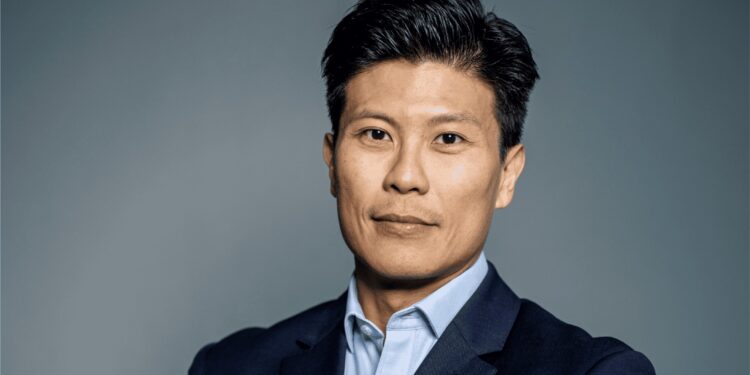
Jenn-Hui Tan, CSO at Fidelity International, on perceptions of ESG integration in asset allocation.

by Funds Europe
4 February 2025
Sustainability is now a core part of most businesses
Share on FacebookShare on Twitter

There’s a lot of noise around sustainability. That’s surprising, given the reality of sustainable investing is that it’s a relatively humdrum activity day-to-day. I should know.

Either way, most investors now view it as a core part of what they do. A recent survey we conducted alongside Coalition Greenwich shows that environmental, social, and governance concerns remain high on their agendas.

That doesn’t mean every investor incorporates it to the same degree. Investing sustainably simply means recognising a particular set of risks – often placed under the umbrella of ESG – and managing portfolios accordingly.

There’s plenty of business-as-usual here. A company that’s prone to scandal has always been a risky asset, for example. But in the last decade, this kind of idiosyncratic corporate risk was merged with more systemic risk factors under the ESG banner, which was then frequently misinterpreted by broader society.

This confusion may eventually lead to the concept being phased out or at least unbundled into specific types of risk. Away from the spotlight, businesses and investors are becoming more sophisticated in the way they think about ESG factors. This should allow for a fuller consideration of material risks such as the physical impact of climate change and the costs of corporate resilience, leading to a more mature role for finance in the transition to a low-carbon economy.

Decarbonisation top of mind, but physical risks getting more attention

Our survey identified ‘decarbonisation’ as the sustainability theme that investors are most focused on right now. Significant investments in clean energy over recent years appear to back up their view.

And yet the world is not decarbonising. In fact, global emissions continue to rise, and extreme weather events are increasing in number and severity. The world is now on track to breach the 1.5 degree warming threshold that countries agreed to target under the Paris Agreement.

As a result, there is a growing focus on the dangers that extreme weather events present to physical assets for companies’ own operations and supply chains, alongside the impact of increased climate-related regulation.

Forthcoming climate disclosures such as the new International Sustainability Standards Board (ISSB) framework and the Corporate Sustainability Reporting Directive (CSRD) in the EU ask companies for estimates of their exposure to physical risks.

The catch lies, as ever, in measurement. As our survey notes, difficulty measuring impact remains the number one barrier to sustainable investing. Until there is credible data on material physical risk, the cost of inaction will remain hidden. Companies will struggle to integrate an understanding of these into business strategies and transition plans, and investors will struggle to price them into valuations. As such, sustainable investors will be watching closely the development of measurement tools throughout 2025.

Role of finance in the transition

2025 will also be a year when investors sharpen their focus on how they achieve their sustainability goals.

This comes amidst contestation over the broader role that finance plays in the transition. Some argue it is not the domain of finance to achieve broad sustainability objectives like economy-wide decarbonisation. Rather, finance is there to provide the capital – it’s up to other actors like governments and regulators to mobilise it.

Ultimately, the duty of finance is to its clients. But there are questions over how it best fulfils that mandate too. Our survey shows investors still view portfolio decarbonisation as the second most efficient way to create positive outcomes (after thematic investing). This approach, while convenient to measure, not only has little real-world impact but adds to the confusion around the term ESG. Simply removing all energy companies from your portfolio, for example, does not stop those assets from moving into other hands. The problem has not gone away, it’s just been deflected elsewhere.

As a result, more investors are looking at how they allocate not only to climate solutions, but also to companies which enable these solutions to be deployed at scale (for instance, through grid expansion). They’re also considering transition finance for hard-to-abate sectors, as well as engaging with heavier emitters on their shift to a lower-carbon economy and the policymakers who can help close regulatory, economic, and technological gaps.

Sustainability moves into next phase

Policy and regulation have often been made at speed in the attempt to mitigate climate and other sustainability risks. Haste brings risks though, as recent discussions around CSRD demonstrate. This regulation potentially requires companies to report thousands of metrics under its double materiality assessment – which involves looking beyond financial risk and towards a company’s impact on other stakeholders and society as a whole. That has prompted backlash, with the EU now reviewing this and other regulation to see where it can reduce companies’ reporting burdens.

There’s a balance to strike here, between reporting corporate plans and metrics that are critical for investment decision-making, and avoiding ‘nice-to-haves’ that may hamper competitiveness through unnecessary effort and cost.

These revisions, a review of the EU’s SFDR product regulation, and challenges to ESG as a concept in the US, are all moving sustainability into its next phase. That’s not necessarily a bad thing. It could bring greater clarity around the most material issues for companies over the short, medium, and long term, resulting in more meaningful and realistic targets, and greater honesty about the trade-offs between different elements of E, S, and G.

We move into 2025 with a more circumspect investment industry. That should make it a more effective one.

The author is chief sustainability officer at Fidelity International

Latest from FundsEurope

Why twelve is the new five in private equity: Flexstone’s Eric Deram on building returns the hard way

Why twelve is the new five in private equity: Flexstone’s Eric Deram on building returns the hard way

4 June 2026
Liquidity is the order of the day

Liquidity is the order of the day

4 June 2026
Will 2025 see an inflection point in digital assets?

ioBuilders tokenisation platform available via Hashgraph

4 June 2026
The Role of Real-Time Data in Performance and Risk Conversations

The Role of Real-Time Data in Performance and Risk Conversations

4 June 2026
Amid market volatility and an ageing population, natural assets endure

Amid market volatility and an ageing population, natural assets endure

4 June 2026
Finding value in the private credit market

Finding value in the private credit market

3 June 2026
Next Post
Japanese companies are outperforming US and European rivals – but why?

Japanese companies are outperforming US and European rivals – but why?

Leave a Reply Cancel reply

Your email address will not be published. Required fields are marked *

ASSET MANAGEMENT: AI & FINCRIME

LATEST ISSUE

VIDEO

NEWSLETTER SIGNUP


Join our mailing list to receive our latest news updates, magazine features, thought leadership and market research & analysis.


SUBSCRIBE NOW
  • Contact
  • Editorial team
  • The magazine
  • Privacy Policy
  • Terms & Conditions

© 2026 Funds Europe Limited, a wholly owned subsidiary of Definite Article Media Limited. Website design by Bedazzled Publishing Services Limited.

Add New Playlist

No Result
View All Result
  • News
    • All news
    • People moves
    • Fund launches
  • Analysis
    • Insights
    • Content Hubs
    • Industry comment
    • Interviews
    • Opinion
    • Roundtable features
    • White paper library
  • Investments
    • Alternatives & private markets
    • Emerging markets
    • Equities
    • ETFs
    • ESG
    • Fixed income
    • Top 200 Fund Managers
  • Asset Servicing
    • Fund administration
    • Distribution
    • Technology
    • Trading
    • Trading & transfer agency
  • Regulation
    • Legal
    • Regulation
  • Reports
    • Industry Reports
    • Research Reports
    • Event Reports
  • Content Hubs
  • Events
    • Funds Europe Awards
    • Industry events
    • Webinars
  • Media
    • Magazines
    • Podcasts
    • Videos
  • About Us
    • Editorial team
    • The Magazine
    • Media Pack
    • Subscribe
    • Write For Us
    • Contact Us
  • Top 200

© 2026 Funds Europe Limited, a wholly owned subsidiary of Definite Article Media Limited. Website design by Bedazzled Publishing Services Limited.

No Result
View All Result
  • News
    • All news
    • People moves
    • Fund launches
  • Analysis
    • Insights
    • Content Hubs
    • Industry comment
    • Interviews
    • Opinion
    • Roundtable features
    • White paper library
  • Investments
    • Alternatives & private markets
    • Emerging markets
    • Equities
    • ETFs
    • ESG
    • Fixed income
    • Top 200 Fund Managers
  • Asset Servicing
    • Fund administration
    • Distribution
    • Technology
    • Trading
    • Trading & transfer agency
  • Regulation
    • Legal
    • Regulation
  • Reports
    • Industry Reports
    • Research Reports
    • Event Reports
  • Content Hubs
  • Events
    • Funds Europe Awards
    • Industry events
    • Webinars
  • Media
    • Magazines
    • Podcasts
    • Videos
  • About Us
    • Editorial team
    • The Magazine
    • Media Pack
    • Subscribe
    • Write For Us
    • Contact Us
  • Top 200

© 2026 Funds Europe Limited, a wholly owned subsidiary of Definite Article Media Limited. Website design by Bedazzled Publishing Services Limited.

Add New Playlist

No Result
View All Result
  • News
    • All news
    • People moves
    • Fund launches
  • Analysis
    • Insights
    • Content Hubs
    • Industry comment
    • Interviews
    • Opinion
    • Roundtable features
    • White paper library
  • Investments
    • Alternatives & private markets
    • Emerging markets
    • Equities
    • ETFs
    • ESG
    • Fixed income
    • Top 200 Fund Managers
  • Asset Servicing
    • Fund administration
    • Distribution
    • Technology
    • Trading
    • Trading & transfer agency
  • Regulation
    • Legal
    • Regulation
  • Reports
    • Industry Reports
    • Research Reports
    • Event Reports
  • Content Hubs
  • Events
    • Funds Europe Awards
    • Industry events
    • Webinars
  • Media
    • Magazines
    • Podcasts
    • Videos
  • About Us
    • Editorial team
    • The Magazine
    • Media Pack
    • Subscribe
    • Write For Us
    • Contact Us
  • Top 200

© 2026 Funds Europe Limited, a wholly owned subsidiary of Definite Article Media Limited. Website design by Bedazzled Publishing Services Limited.