Europe finds itself at a critical juncture. Ongoing geopolitical tensions, financial market volatility, and a higher cost of living for European citizens highlight the need for strong leadership from our political class. These challenges are not insurmountable, and with ambitious and pragmatic policymaking, there is an opportunity to put citizens, the single market, and the EU on a more prosperous path.
First, the realisation of the EU’s Capital Markets Union (CMU) is pivotal for future growth. Robust domestic capital markets are essential for fostering a dynamic entrepreneurial environment, from financing start-ups to facilitating Initial Public Offerings (IPOs), and for enhancing the financial resilience and well-being of European retail investors. The transformation of the EU economy towards decarbonization demands substantial investments in relevant infrastructure and industries. To attract private investments and engage citizens in supporting this societal transformation, Europe must create an environment that offers attractive access to capital markets. An obvious starting point is the need to develop solutions for retirement planning.
Activating private investments and attracting more retail investment necessitates a populace with strong financial literacy and a culture that is less risk-averse. Most Europeans allocate a significant portion of their savings to deposits, amounting to more than €10.000 billion from private households alone. This substantial amount has remained steady even in the previous prolonged low-yield environment. Improving financial education for children and young people is an important step. However, to truly shift from merely saving to actively investing, individuals need high-quality financial advice. Such advice is crucial for enabling and empowering investors to navigate capital markets effectively. This evolution from savers leaving the “cash trap” to becoming investors is necessary for European citizens to maximize their financial potential and contribute to broader economic growth, including the transformation of economies to carbon neutrality in line with COP targets.
Retail investors also need access to products that are most suitable to their individual circumstances and will help deliver their investment objectives. Recent developments, such as the EU’s Retail Investment Strategy, highlight the commitment from policymakers to address this head-on. It seems the co-legislators are moving away from a potential ban on retrocessions and are placing greater focus on supporting investors through a more holistic assessment of value, with a particular emphasis on transparency. While negotiations on the proposed legislation are ongoing, this carefully crafted balance aims to enhance investor protection, focusing on the best possible outcome for investors while allowing appropriate advice to remain possible. The new framework will ensure that investors can benefit from access to active asset managers, who may deliver better outcomes and demonstrable benefits over other strategies, countering the misperception that “the cheapest is best.”
Similarly, investors should be able to access more innovative products, where appropriate. For example, the continued rise of active exchange-traded funds can provide significant value addition for investors, complementing more traditional fund structures such as actively managed SICAVs. Furthermore, the rise of tailor-made mandates, known as sub-advisory, is becoming central to the industry’s future. Retail alternatives, such as European Long-Term Investment Funds, offer significant opportunities for investors, distributors and advisers. These instruments and strategies are core to the evolving landscape, ensuring that investors can benefit from innovative and effective financial solutions.
A necessary element for achieving these goals is the establishment of a more consistent and harmonised regulatory framework. Policymakers in the EU should consider whether a better balance can be attained between investor protection and empowering EU retail investors to leverage global capital market opportunities and benefit from the expertise of both multinational market participants and robust local financial institutions. The topic of a more harmonised legislative framework has come into sharper focus recently and is often accompanied by commentary on the need to review supervision. However, discussions over fundamental changes to the EU’s supervisory architecture, including a potential broader shift to more centralised supervision, may be premature when there remains such variability in rules across Member States. There is also a strong case for simplifying the current rulebook. The EU must move beyond merely setting goals and focus on the pragmatic steps needed to achieve them. This involves adopting a mindset that prioritizes solutions over obstacles.
Finally, it is critical that we do not abandon the principles that have served us well to date. Openness and the ability to effectively combine global expertise with the EU’s approach to investor protection have been crucial to the successful growth of our capital markets, with perhaps the best example being the UCITS brand, which has become the global standard. As we look to address the aforementioned challenges and consider the next stage of developing Europe’s capital markets, the focus should be on highlighting the strengths of the European economy and ensuring we foster an environment that attracts both international and domestic investment. Any restrictions to capital flows or the redirecting of investments by policymakers would be counter-productive. As set out by European Commission President von der Leyen in her recent Political Guidelines, our opportunities may indeed be too big to grasp alone.
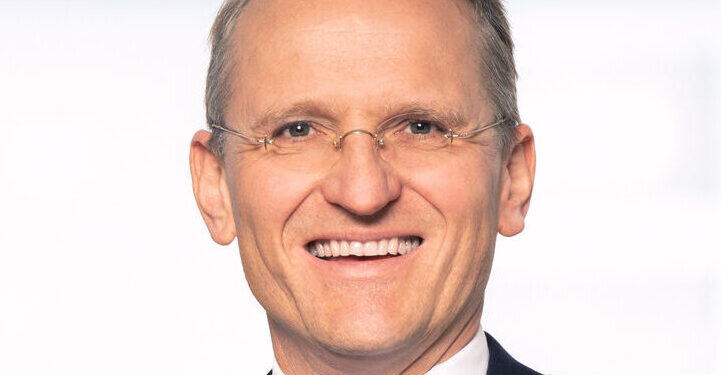
The author is Christoph Bergweiler, head of continental Europe funds at J.P. Morgan Asset Management