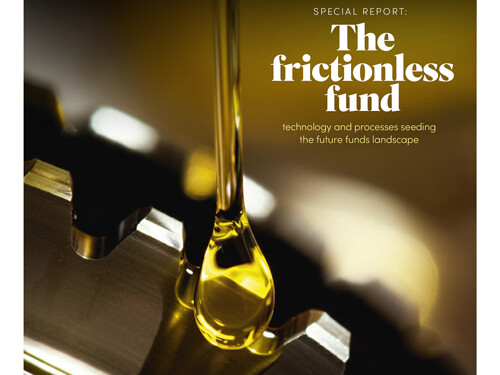
The asset management industry is undergoing a structural evolution, frequently framed as a crude choice between becoming a scale giant or a narrow niche boutique. However, there are indications that mid-sized managers have an excellent opportunity to challenge this standard narrative – according to key points included in the special report produced by Funds Europe in association with Calastone
By combining strategic clarity with modern operational tools, these agile players can secure a distinct competitive advantage.
Rather than trying to mimic the largest global houses, mid-sized firms can thrive by being highly disciplined about where they possess a genuine right to win. This requires a rigorous alignment of operations behind specific capabilities, such as private markets or active ETFs.
A key advantage of the mid-sized model is the flexibility to maintain a broader, more meaningful dialogue with clients who prefer fewer partners, without suffering from the rigidity of pure specialists whose core competencies might fall out of favour.
Also, what technology gives, it can take away: historic scale advantages enjoyed by industry giants may weaken due to technological advances. The commoditisation of artificial intelligence (AI), particularly large language models, makes sophisticated automation accessible to firms of all sizes. Mid-sized managers are already deploying AI to enhance personal productivity, automate fund factsheets, and streamline RFP workflows. This shifts human capital towards higher-value tasks, moving from a passive approach to a focus on premium human reasoning.
Furthermore, innovations such as tokenisation offer profound operational improvements. By acting as a fast follower, a mid-sized firm can adopt tokenised distribution as a strategic tool to access new digital-native investor cohorts and decentralised finance (DeFi). Because tokenisation can be introduced as a middle layer over existing systems, managers can experience nearer-term asset growth and lower transaction costs without an immediate, expensive overhaul of their entire infrastructure. This allows fractionalisation, lower entry thresholds, and faster processing.
To unlock this potential, mid-sized managers must modernise their unglamorous plumbing work. This involves decommissioning fragmented legacy databases and adopting application programming interfaces to support clean, real-time data sharing with specialised third parties. Repositioning technology from a tool for cutting costs to a core driver of client-centric growth enables these firms to respond dynamically to modern investor expectations.
To read the full report, click here: “The frictionless fund“